What elite rugby reveals about leadership under pressure
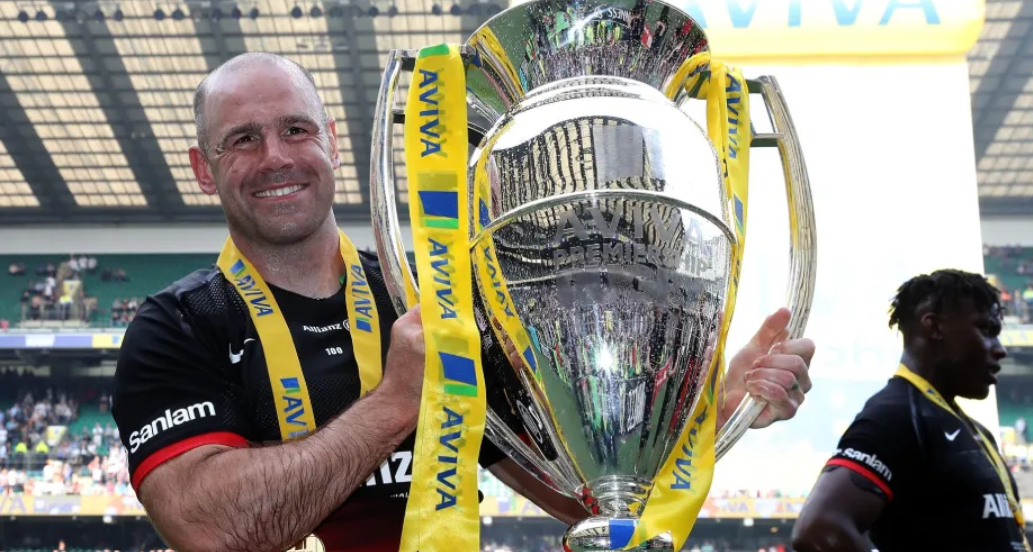
Charlie Hodgson built his career in one of the most demanding performance environments in professional sport.
A former England international and Premiership-winning fly-half, he spent 16 years operating under pressure, scrutiny and expectation, where marginal gains and mental resilience made the difference between success and failure.
Since stepping away from elite rugby, Charlie has translated those hard-won lessons into the world of business and leadership.
Now recognised as a leadership speaker, he draws on real experiences of setbacks, criticism and high-stakes decision-making to help teams understand mindset, accountability and what high performance truly looks like when it matters most.
In this exclusive interview with the High-Performance Speakers Agency, Charlie shares his perspective on building high-performing teams, developing resilience through failure, and why mindset remains the defining factor between those who thrive under pressure and those who fall away.
Q1. From your experience at the elite end of sport, what fundamentally separates average teams from those that consistently perform at the highest level?
Charlie Hodgson: “Well, suppose we’ve all been part of teams at some point in our lives. Maybe it was on the field, in an office, even with our families. We’ve all seen, I think, the difference between average teams and ones that really operate at the highest level. I think what makes the difference is ultimately around getting the right people on the bus.
“It sounds really simple, it’s easy to say, but actually really hard um to get right. And for me, it’s having the right people within your organisation and the link to the values and the behaviours expected of them.
“I’m going to share a short story because back in 2010, I mentioned this coach before, Brendan Venta. They had a huge clear-out of players because they were in the middle of the table. They kept offering lots of money to players who were deemed superstars, but actually, they weren’t producing what they perhaps should be.
“And Brendan looked at this, and he came in and spent hours and hours watching players individually. He watched how they trained. He watched how they prepared, how they interacted with others. He had a clear image of the type of behaviours that he desired of everybody.
“And basically, those that fitted his way stayed and those that didn’t left.
“And I think many businesses have values written all over the walls of their office. But I guess the question is how many can really, truly say they live by them each day. I really believe that Sar’s did and that, as I say, was probably one of the reasons why they became one of the most successful teams in Europe.”
READ MORE: Six Nations opinion: Five notable absences from England’s squad

Q2. Why is mindset often the decisive factor in determining who thrives under pressure and who ultimately falls away, even when talent and opportunity are equal?
Charlie Hodgson: “Have you ever wondered why two people given the same resources, opportunities, challenges end up in completely different places? One thrives and one struggles. And I think the difference there is around mindset.
“I know that I was involved with young players when I first started off my career. We were both offered the same opportunity. We both did the same training, but yet there was something slightly different in our approaches, and I became very focused on what I wanted to achieve.
“And I think the distraction for other people became too much, which is kind of why their careers kind of disappeared and went into an abyss, really. But for me, it’s around mindset, and the ability to bounce back from really, really difficult situations, and I’ve experienced a huge number of those setbacks in my career.
“Most notably, probably very early on, when my kicking performance wasn’t great, and I got absolutely hounded by the media for a long period of time, by opposition players for a long period of time.
“But the ability to bounce back, whilst it took me a long time to really understand how to do that, was probably one of the reasons why I managed to last 16 years in a professional rugby career.”
Q3. Setbacks are inevitable at the top level. Based on your career, what practical principles help individuals navigate failure, rebuild confidence, and move forward stronger?
Charlie Hodgson: “I think the first thing is it’s actually just accepting that it’s okay to fail. We all make mistakes. Sometimes people can come down hard on others who make mistakes.
“But actually, the only way that we grow according to Carol Dwek and her growth mindset is that we need to fail, as it’s kind of it’s a prerequisite for life in general. We have to fail. So, we do learn from those mistakes, and we move forward.
“Second thing is, don’t make excuses. Quite often, we can blame others. We can blame situations. We can blame environments. We can blame external factors, which of course do have their play, but for me, there’s an element of taking uh taking hold of it from a personal point of view, personal perspective and understanding well what I can do differently next time.
“Thirdly, I would say seeking support and asking for help. I’m guilty of this as anybody because I will try to fix problems by myself without seeking support or help. Um, so that’s a key thing for me.
“And then the final thing is around perspective. This is a huge question that I’ve always asked myself from a young age as a player is will it matter next week? Will it matter in a month, or will it matter in a year? And chances are when you start to gain some perspective on those things that have happened, you’ll realise that it’s not that bad.”
ALSO ON SNB: When and where is Super Bowl LX taking place? Star players to watch; half-time show

Q4. When people leave your talks, what specific shift in thinking or behaviour do you want them to take away and apply immediately in the real world?
Charlie Hodgson: “I think my biggest hope is that listeners take action based on what they’ve heard. Whether that means a shift in mindset, a change in behaviour, even a new perspective. I think I’d like my message to resonate in a way that leads to, I guess, real-world impact.
“If I get the question afterwards that says that was great, but so what? Then I don’t really think I’ve done my job. So, for me, it’s about making sure that people walk away with some tangible practical things to move forward.”
This exclusive interview with Charlie Hodgson was conducted by Tabish Ali of the Motivational Speakers Agency.
READ NEXT: How Sara Cox Rewrote the Rules of Authority in Men’s Sport