How Sara Cox Rewrote the Rules of Authority in Men’s Sport
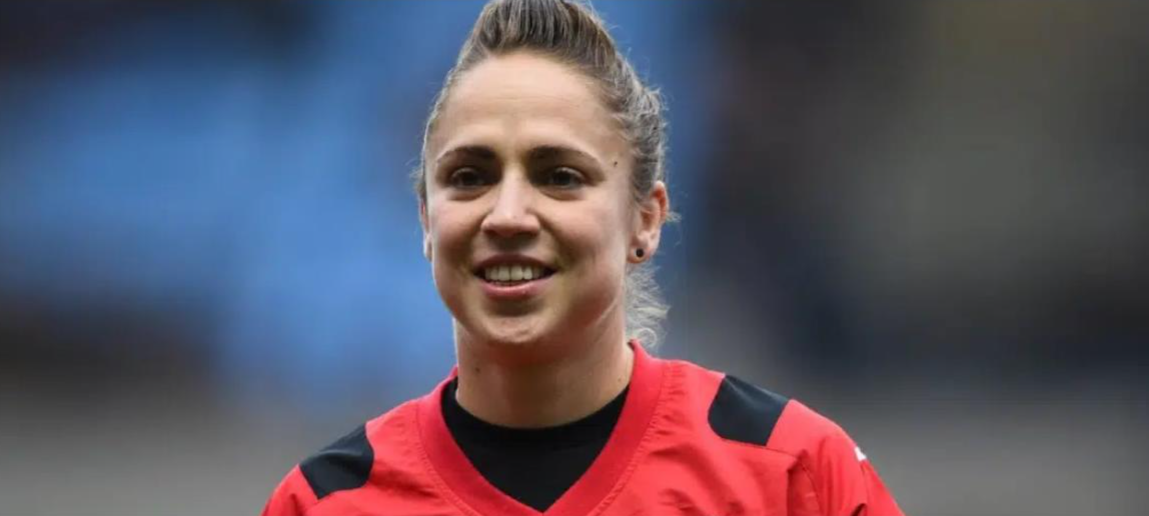
Sara Cox MBE is one of the most pioneering figures in modern rugby union and a leading voice among female inspirational speakers, known for breaking barriers in a sport long dominated by men.
Widely recognised as the world’s first professional female rugby union referee, she has made history by officiating at the highest levels of the game, including becoming the first woman to referee a Premiership Rugby Union match.
Over more than a decade at the elite level, Sara’s journey has taken her from grassroots rugby to the global stage, officiating at the Olympic Games, Rugby World Cups and top-tier international fixtures. Her rise was not defined by shortcuts or symbolic milestones, but by consistency, credibility and performance under pressure in environments where scrutiny is unforgiving.
In recognition of her trailblazing contribution to sport and equality, Sara was awarded an MBE, cementing her status as a role model both on and off the pitch. Her work continues to influence how organisations think about leadership, resilience and inclusion in high-performance settings.
In this exclusive interview with the High Performance Speakers Agency, Sara Cox reflects on overcoming resistance, building confidence in male-dominated environments, and why visible female representation in sport remains critical for the next generation.
Question 1: You’ve been at the forefront of several firsts in elite rugby officiating. What were the toughest professional barriers you faced early on, and how did you establish authority in environments that had never seen someone like you before?
Sara Cox: I think, as with everything, it’s really difficult when you’re first to do something because you are the first, so nobody’s trodden that path before. It was really good to follow in the footsteps of two others, two females that had really pushed the boundaries and really started making people ask questions.
Then I sort of came along and started to take on that gauntlet and take that to the next level. I found myself in a position where nobody had ever trodden that before, and nobody had been in that position
where a female had been at that level. Especially with the players as well, it was a little bit of a new thing for everyone, and we all had to get over the hurdle of what do we call you, do we still address you as Sir like we would other referees.
I took that on and found myself trying to break through those glass ceilings and really push forward and take on that next challenge. There were things that got in the way, yes. There was a question around my gender. Is it possible that you can do that? Is it possible for you to get to the next level?
We got into a position where yes kept being the answer, and all of a sudden, I found myself knocking on the door of a Premiership game. My boss said to me, its time, we’re going to go for it. That’s when I found myself in the middle of the Harley Quinn’s Wora game.
To be there and know what I’d overcome in the past, what I’d done to get myself there, the fitness, the amount of stuff that I’d done in the background to really get myself in that position, it was all starting to pay off. I get there in the middle and it was amazing. It was the best feeling in the world. I had my family around me, and it all really made everything worthwhile.
READ MORE: How elite mindset shapes everyday success: An interview with Heather Fisher
Question 2: Rugby refereeing is an unforgiving arena. What mindset or behaviours were most critical in helping you earn trust and respect in a male-dominated sport?
Sara Cox: That’s a really good question. I guess I put it back to dogged relentlessness and just not giving up. Male-dominated environments are really difficult, and for basically what they are, you’re surrounded by a norm of men being in those positions.
As a female, when you come in and start challenging that, it does raise some eyebrows. It does get some questions. There is some resistance to what’s happening. It’s about not letting that stop you from doing it. You’ve just got to keep going.
I’ve had some really low moments, and I’ve had some really high moments as well. You get into a position where you say that was worth it in the end, because people looking in say, if you hadn’t done that, my child wouldn’t be paying attention to rugby, and my brother or sister wouldn’t want to go off and do this.
It’s not necessarily about my role as a referee. That in itself is quite something. It’s about the focus coming in on rugby as a support network, as a community and as a sport that people want to get involved in, in the background.
Without the background stuff, I wouldn’t be in the position that I’m in. We need people supporting that. It’s about being involved, being around that, absorbing the atmosphere and enjoying just being in that sport.
YOU MAY ALSO LIKE: How Emily Campbell became a trailblazer for women in strength sports

Question 3: From your experience at the highest level, what does true inclusion look like in sport, and how can organisations move beyond surface-level initiatives to create environments where everyone can perform?
Sara Cox: I think it’s about understanding what people need, and that can almost be regardless of your gender at that point. It’s about understanding the human beings themselves.
If you were to treat me exactly the same as my male counterparts, it wouldn’t work because I have different needs to what they do. It’s about understanding the individual themselves and tapping into what do you need, how can I make that happen for you, and how can I put you in a position where your environment is stable and something you enjoy being in, so that you can perform to the best of your abilities.
That has really been my mantra as well. What can I do to create an environment where I can thrive? That’s regardless of my gender. That’s just about me as a human being.
READ NEXT: Why motorsport is leading the way on sustainability and data, according to Karun Chandhok

Question 4: Visibility matters in elite sport. Why is female representation in officiating and leadership roles so important for the next generation of athletes?
Sara Cox: I think it’s really important that young athletes see other younger athletes involved. It’s important that they have someone to admire and something to look up to.
By me putting my face out there, it’s given a platform for people to understand that not only am I slightly younger when I started doing this, so there is clearly a pathway there, I’m also a female who’s managed to do things in a world where that hasn’t happened before.
It’s important that people have others to be inspired by, and again, that can be regardless of gender. It’s about putting it out there all the time to say you don’t have to be in the latter stages of your career to achieve something.
I started back in 2007, when I was 17. That in itself is a little bit unknown, because people often take up refereeing after playing, in the latter stages of rugby. Whereas myself and a couple of other people took it up very early on.
It’s about challenging that norm and saying this is actually a pathway that is now a career path. It has really paved the way for myself, where I’ve gone around the world and experienced phenomenal things that I would never have got the opportunity to do if I hadn’t taken that up.
This exclusive interview with Sara Cox was conducted by Chris Tompkins of the Motivational Speakers Agency.
YOU MAY BE INTERESTED IN: How Benjamin Alexander rewrote the rules to become Jamaica’s first Olympic Alpine skier