NFL Draft 2026: Seydou Traore’s Miami Dolphins signing marks milestone for league’s UK Academy
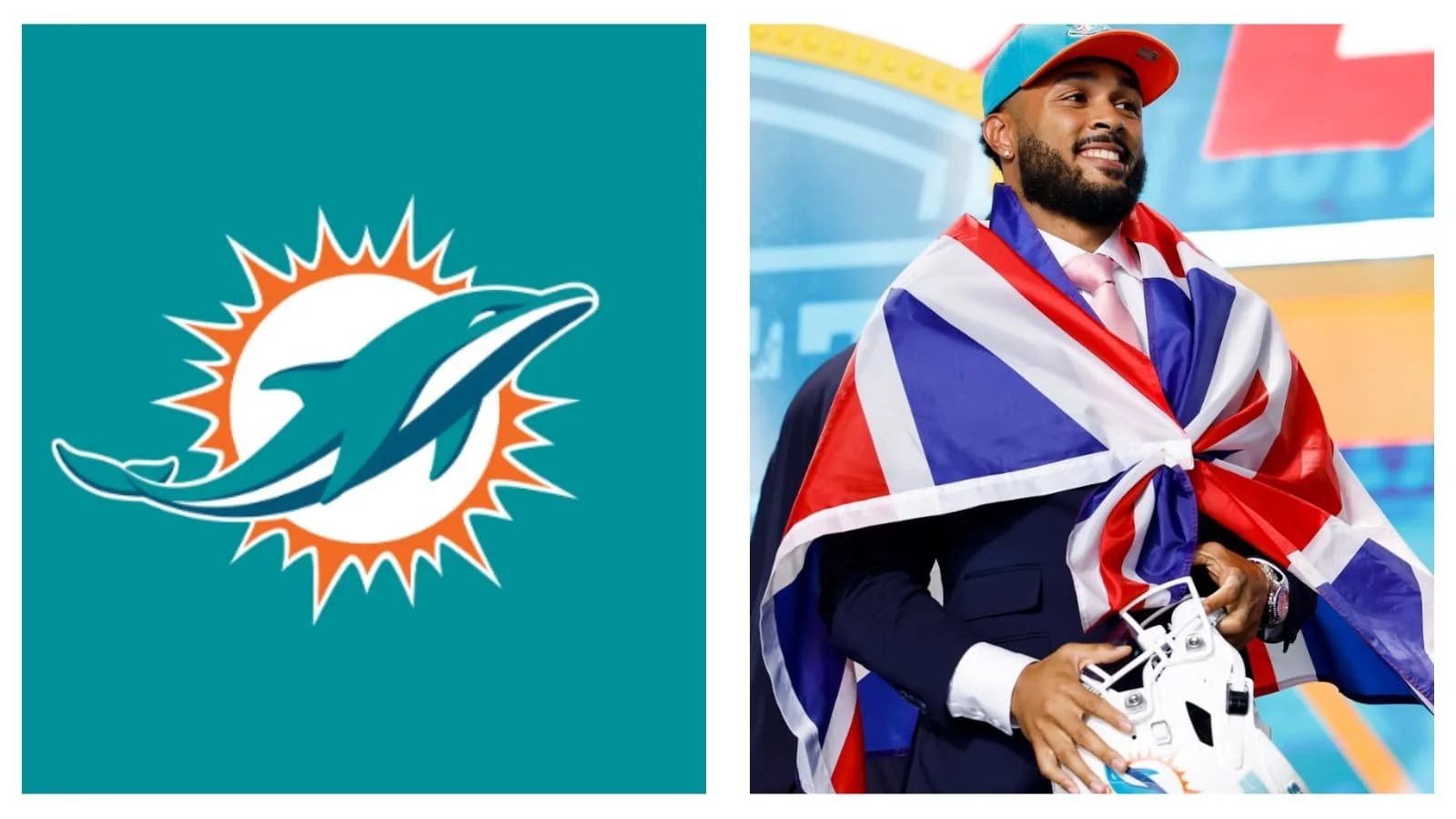
Seydou Traore’s NFL journey began in a place few Americans ever imagine their careers starting: on the muddy battlefields that are football pitches in south London, writes Sports News Blitz’s Francesca O’Callaghan.
Like most British teenagers, Traore’s first sporting aspirations revolved around football, playing goalie, and he had insufficient reason to believe American football would turn out to be his future.
Yet, on April 25 in Pittsburgh, that all changed as the 23-year-old Londoner became the first graduate of the NFL Academy in the UK to be selected in the NFL Draft when the Miami Dolphins chose him with the 180th overall pick.
For a league that has invested time and money in trying to expand beyond North America and for a British route still in its early stages, this breakthrough moment is a game changer.
“This isn’t just another name on a card, this is living proof that the dream is possible,” said British defensive end Efe Obada, who announced the pick on stage.
Obada, the former London Warriors player who became the first graduate of the NFL’s International Player Pathway programme, has long served as proof that elite athletic talent exists outside the traditional American football system.
Seydou Traore’s groundbreaking NFL journey
The NFL Academy, launched in London in 2019 before relocating to Loughborough University, was created to recognise and grow young international athletes with professional potential.
Traore arrived after first discovering the sport with the London Warriors while playing nine-on-nine football as a teenager – an opportunity for young players to grasp positioning, tactics, and formations.
He later moved to the United States to continue his progress at high-school level before spending five years in college football, initially at Arkansas State and later at Mississippi State, where he began to draw NFL attention.
At 6ft 4in and 244 pounds, Traore combines the physical dimensions of a modern tight end with the skills he picked up from playing football as a kid like hand-eye coordination and attacking the ball at its highest point.
He tallied 131 catches for 1,482 yards and 10 touchdowns across his college career, including five touchdowns last season, while also running a 4.5-second 40-yard punt coverage, securing an invitation to the East-West Shrine Bowl.
Miami general manager Jon-Eric Sullivan described him as “a raw, athletic ball of clay”, the type of player NFL organisations firmly believe can be moulded into an outstanding contributor to the league.
That projection is key to how the NFL now handles international recruitment.
The International Player Pathway programme, established in 2017, was designed to create a formal route into the league for athletes outside the United States.
Across international specialist training camps, players are identified, assessed, and developed before gaining opportunities within NFL franchises.
This showcases how international growth is no longer viewed solely through television audiences and overseas games in London, Frankfurt, or São Paulo.
Therefore, Traore’s selection matters because it validates the NFL’s investment in Britain as a new territory for developing players rather than simply a commercial one.
READ MORE: Super Bowl LXI contenders: Who is likely to be on top according to recent odds

How the NFL Draft works
Held annually over three days each spring, the NFL Draft enables the league’s 32 teams to select suitable college players entering the NFL.
Seven rounds are held, with each team obtaining one pick per round unless selections are traded, with the overall intent of promoting competitive balance.
Teams with the worst records from the previous season pick earlier (Arizona Cardinals), while the reigning Super Bowl champions (Seattle Seahawks) select last in each round.
Franchises can also trade picks, either during the draft or months beforehand, often surrendering future selections in search of immediate improvement.
Teams are not merely drafting for existing capabilities, but for what they believe a player may eventually become.
That explains why athletes such as Traore – and later Nigeria-born Uar Bernard, selected by the Philadelphia Eagles despite a lack of experience – intrigue franchises who have the infrastructure to develop players over several years.
YOU MAY ALSO LIKE: F1 vs NFL: Two sports, one question over women’s place at the top
Changing perceptions of international players
Since the NFL’s first season in 1920, international players have always existed on the margins of the sport.
Only two previous IPP players had been drafted before Traore: Australian offensive tackle Jordan Mailata in 2018 and British-born Travis Clayton in 2024.
Mailata, after switching from rugby league, has since become one of the NFL’s primary offensive linemen and helped the Philadelphia Eagles win the Super Bowl in 2025.
His success altered perceptions across the league as teams began to accept that elite athleticism was a basis upon which technical football skills could ultimately be built.
This outlook was again visible later in the seventh round this year when the Eagles selected Bernard with the 251st overall pick.
Bernard had worked as a personal trainer before being identified through NFL camps in Africa.
“It was a passionate endeavour for us,” Eagles general manager Howie Roseman said.
“His physique is filled with several tools. We are aware that it will require time.”
Bernard’s selection emphasised the increasingly international nature of talent identification within the NFL.
As Mailata said in 2025: “Whatever we did last year, it doesn’t matter. We’re not defending nothing. We have our mission, and now we gotta go do it all over again.”
READ NEXT: NFL news: Fernando Mendoza - From no-name prospect to number-one draft pick