MMA opinion: One promotion, one story - Exploring the UFC’s narrative machine
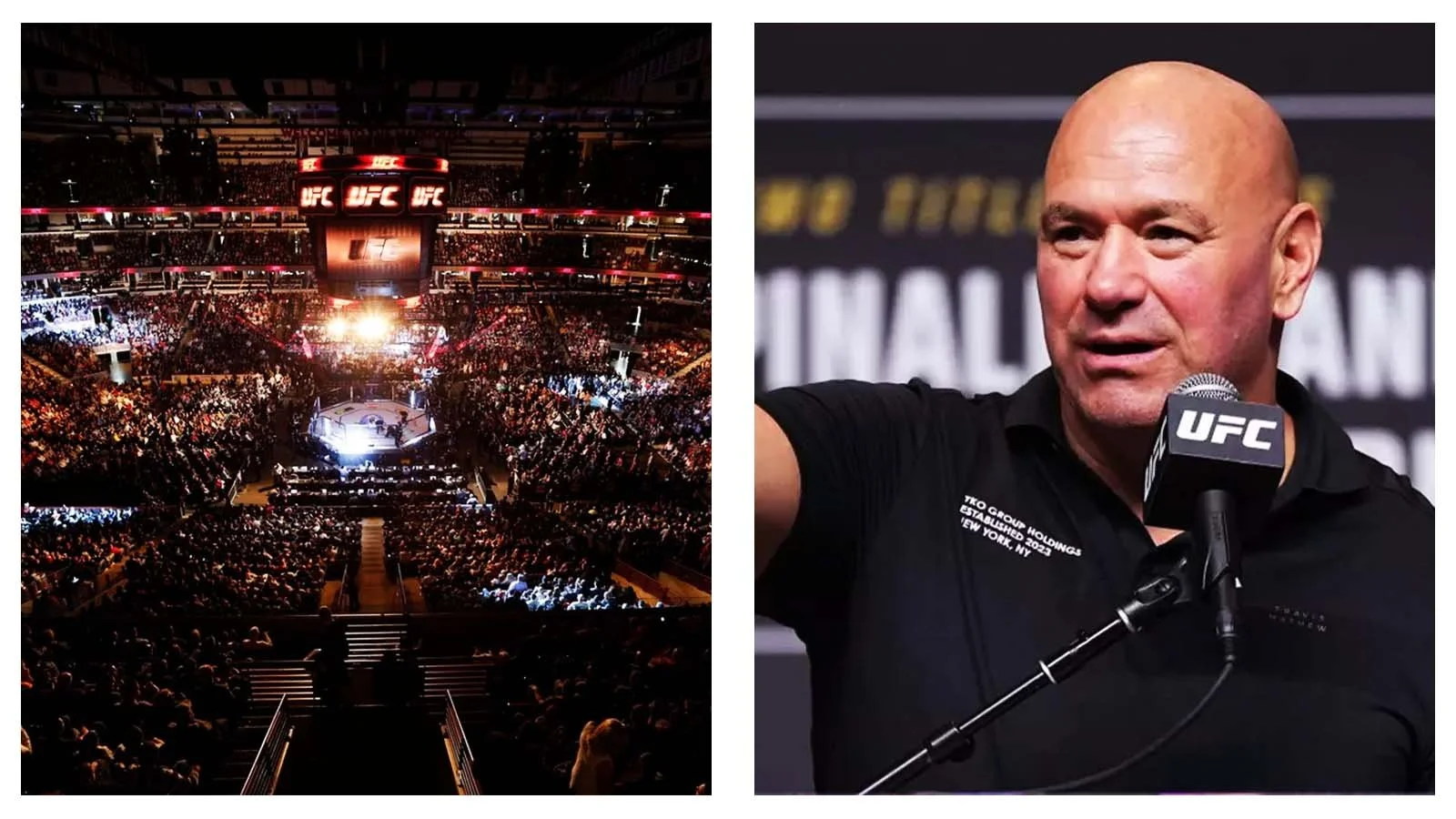
The UFC is one of the biggest and most lucrative brands on the planet - and its press machine is well oiled thanks to the all-seeing eye of Dana White.
Here, Sports News Blitz writer Ollie Hughes takes a look at how the UFC controls the narrative better than any other sports league.
Hushed silence
The hushed silence at UFC post-fight press conferences is unnerving. Like a dinner with the in-laws, no one’s going to rock the boat. Not one toe out of line.
A thin veneer of journalistic autonomy, beneath which lies control.
The fights are done, the results are in. We now wait to hear the official party line from our benevolent figurehead.
Dana White makes his way to the stage and leans forward into the mic.
“Okay who’s got the first question?”
You’ve seen one of these press conferences, you’ve seen them all. The softball questions, the deferential framing, the fawning.
We know what happens to dissident voices, or rather we’ve seen them disappear from future events.
Any awkward questions are met with outright mocking and derision from White.
READ MORE: MMA opinion: Right wing, left hook: How politics took hold of the UFC

Tight-fisted grasp
With such a tight-fisted grasp on the UFC’s media coverage, is it any wonder that journalists, whose careers rely on media access, are cowed into submission.
But what sets the UFC apart from other big players like the NBA, NFL and FIFA? Well, quite a lot actually.
Mixed martial arts likes to present itself as just another major sport, but structurally the UFC couldn’t be more different from those previously mentioned.
Those leagues are messy by design: collections of independently-owned teams, powerful players’ unions, cautious commissioners and a media culture that expects confrontation as part of the job.
Stories compete, narratives clash, and no single figure gets to decide what the truth is.
One voice setting the tone
The UFC, by contrast, is uniform. One dominant promotion, one president, one set of rankings, one voice setting the tone.
Fighters aren’t employees, but independent contractors and with no fighters union, there’s no independent body to step in when sporting logic is bent for promotional convenience.
In other sports leagues, the journalists shape the story. In the UFC, that’s the promotion's job.
At this point, the UFC isn’t just a sports league, they’re a media company and their aim is to put bums in seats.
YOU MAY ALSO LIKE: MMA news: Paddy Pimblett lays out mega three-fight plan for 2026

Promotional storytelling
Consequently, the skill of fighters takes a backseat to promotional storytelling.
Official rankings can try and give some legitimacy to the matchmaking, but when those rankings move to the tune of marketability, the whole thing becomes a popularity contest.
And when there’s no one to call this out, the integrity of the sport suffers.
Fortunately for the UFC, an entire media ecosystem has been cultivated to feed the beast.
Ex-fighters, media personalities and MMA enthusiasts all throw in their two cents but inevitably have to self-censor for fear that some clip might make its way back to Uncle Dana and put them in his bad books.
Window closes
One word from management, and a very big window into the world of MMA closes as fighters are told to not take interviews with journalists deemed troublesome.
Loretta Hunt, Josh Gross, Karim Zidan and Ariel Helwani are just some of the journalists currently blacklisted from attending UFC events.
In this game, access is currency and criticism can become very expensive.
In place of hard-hitting, investigative journalism, we have Nina Drama, Nelk Boys and The Schmo.
As tempting as it is to punch down on these, there’s always a place for formats that provide something a bit different and get fighters to come out of their shell.
Interviewers like Nardwuar the Human Serviette made an entire career from this in the music business.
The problem arises when these pundits are rewarded with exclusive appearances and inside access.
If the only questions being asked are “what’s your favourite colour”, fight fans are left uninformed and apathetic to the greater issues facing the sport.
Issues, for example, like fighter pay, that the UFC is all too keen to keen out of the public discourse.
YOU MAY BE INTERESTED IN: MMA news: ‘I can’t be in that position’ - Dana White reveals why Jon Jones will not return at UFC White House card

Vow of silence
And it’s not just the media that’s taken this vow of silence.
On paper, fighters are the stars of the show but in reality, they are some of the most dispensable workers in professional sport.
Careers are fleeting, contracts can be cut short, and with no union its every fighter for themselves.
Speak out too loudly and you’re suddenly “difficult”, “hard to work with”, or worse, “not active enough”.
Title shots disappear as deals stall and the phone stops ringing.
Unlike athletes in the NFL or NBA, fighters can’t rely on collective bargaining or guaranteed contracts to protect them when they challenge the system.
In a sport that sells toughness above all else, silence is often framed as professionalism and for many, it’s the only way to stay employed.
Ultimately, if the UFC can continue to get away with this, then why should they change?
There is nothing to gain on their part by introducing contradictory voices in the sport.
The only instrument for change would be a major competitor gaining enough traction to challenge them.
Monopoly strengthened
Sadly, this looks increasingly unlikely as the merging of the second and third largest promotions, PFL and Bellator, seems to have only strengthened the UFC’s monopoly.
There’s no denying that the current model is working for the UFC.
They’ve grown faster and more efficiently than almost any sports organisation in modern history.
But that efficiency comes with a cost.
When one company controls everything, debate becomes theatre rather than actual scrutiny.
As MMA pushes further into the mainstream, the question isn’t whether the UFC can keep telling its own story, it’s whether the sport can afford for it to be the only one that’s heard.
READ NEXT: Alexander Volkanovski reacts as controversial Diego Lopes rematch confirmed for UFC 325