How elite mindset shapes everyday success: An interview with Heather Fisher
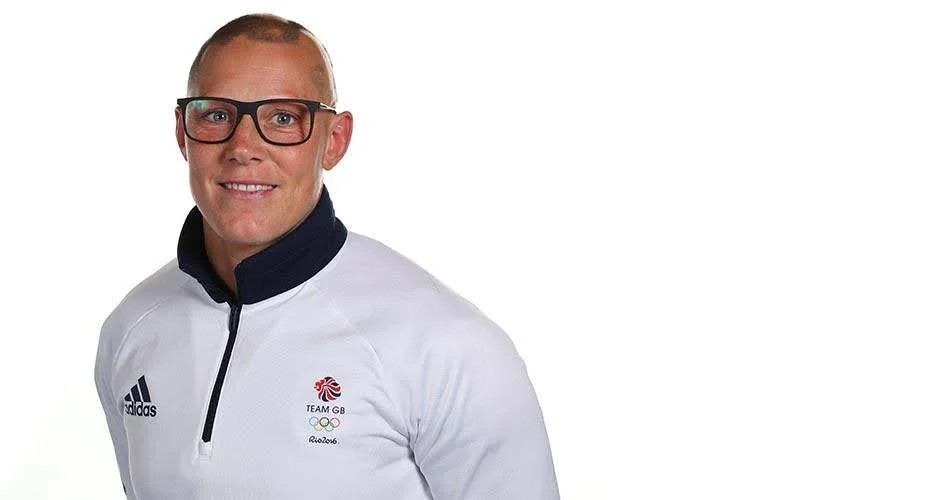
In a world where success is often measured by medals and record times, Heather Fisher offers a compelling reminder: resilience, mindset and integrity matter far more than trophies.
As a former elite athlete turned powerful advocate for personal growth and leadership, she embodies the values of grit, authenticity and the relentless pursuit of excellence.
Her journey - from back-breaking injury and recovery to redefining what it means to win - shows that true strength lies in rebuilding, self-belief and harnessing adversity as fuel for growth. As a female motivational speaker, Heather speaks with rare authority to anyone seeking not just professional success, but personal transformation.
In this exclusive interview with the London Keynote Speakers Agency, Heather Fisher opens up about the core qualities of a winning mindset, the tough road to recovery, and how elite sport principles can reshape the way we lead our lives and businesses.
Q1. From your experience, what truly defines a winning mindset beyond the clichés we often hear?
Heather Fisher: “From my experience, your culture and your environment are absolutely everything. If you get the person right, then I totally believe you get the performance.
“So winning mindset is turning up every day, which I know sounds a little bit of a, ‘oh yeah you just turn up,’ but it's about consciously being aware of yourself, consciously choosing your attitude, consciously making good decisions, and being so self-aware that you're aware of, you understand the decisions made by yourself and how they affect your team-mates around you.
“And every day approaching it like, you know, we would have 100 days till Tokyo written up, um, 500 hours in the gym, 300 hours of skills all written up every day, and then every day it'll be tailored down towards where we're at. But that's the structure and the framework.
“But then in between that, you've got the chaos which is dealing with your body, dealing with the injuries. So you have to be so adaptable, and you have to know yourself so well instinctively that your unconscious becomes conscious without even having to think about it.
“The winning mindset is insane because, I don't know, like every athlete I know just has it within them, and it's that want to go again and want to go and work for your team-mate. And you have to want to go and play for your coach.
“In business, you have to go and want to win business for, you know, for your manager, for your business, for your brand. You have to want to go and do it for someone.
“So for me, that winning mindset comes down to your culture, environment, it comes down to your attitude, behaviours, um, and it comes down to just doing something bigger than yourself.”
READ MORE: British & Irish Lions news: The top five Lions players of all time

Q2. You’ve faced extreme setbacks, including severe injury. What do your experiences reveal about the real nature of adversity and recovery?
Heather Fisher: “Let's go back in time. Fish, I had hair at this point. In 2012, I think it's 2012, like 11, 12, I broke my back in four places.
“When you're an athlete, hand on heart now, you believe that you are totally invincible. Like nothing can hurt you, nothing can break you. It's me versus you, and I'm going to win. It's literally that simple. And that mindset is like up here.
“When I got injured, I got taken out in the air, um, and I broke my back in four places, and I was in a plastic cast from my neck down to my waist for a year and a half. Then I lost all my hair due to stress, hence why I'm a bald egg on...I'm a bald egg on stilts, right?
“But when you go through something like that, you realise that number one, you're not invincible, and number two, you realise that you've got to be able to pick yourself up. And it's scary because you don't know how, you don't know how far you're going to fall, because you don't realise sometimes how far you've gone to be able to play for your country in World Cups.
“And then get taken out, break your back, wear a back brace, and learn how to crawl, how to walk, how to run.
“It then took a conversation with my parents to go...I got selected for Hong Kong Sevens for England. And although we'd done controlled contact for about a year, I was never scared walking out on the pitch. I remember being in the tunnel for Hong Kong Sevens, and we weren't sure how my body was going to handle it.
“And the conversation with my parents was very much about, I'm going to take a risk. And sat down with the doctor and, if I take a hit that's come from a different angle or an angle my body doesn't like, I risk being paralysed.
“And when you have that real conversation with your parents, you sit there and go, I want to go for it. I want to know what I can be, and I don't want to look back and think, ‘what could I have been?’
“You soon realise that adversity is actually a deeper connection with who you want to be and where you see yourself going. Being able to overcome something where you feel so scared, where you've been the bravest of the brave, and suddenly you're so scared, and you don't know what's going to come, and you trust yourself enough that when you get there, you'll just deal with it because you're equipped for it. For me, that is adversity.
“But then every day, that resilience to keep going and to be at the top of your game. As a youngster, you set out playing for your country, and it's all about, I want to play for England, I want to be at the Olympic Games, I want to be at the World Cup, I want to play, tick them.
“And then you get there, and you suddenly realise resilience and the bravery and the mindset, um, the cage within, is actually all about, can you repeat it every day? It's no point performing for one day, you've got to be able to go and go and go and go again.
“And for me, the adversity of coming back from my broken back and then my identity of my hair loss led me to a real...I suppose it changed my life because I had to really learn what real strength of character was. And I had to really understand who I was so I could bring my character to the surface to go and achieve.”
ALSO ON SNB: Padel news: Aimee Gibson moves to career-high world number 81 after impressive FIP title hat-trick
Q3. What are the most powerful lessons businesses can borrow from elite sport in order to improve performance and culture?
Heather Fisher: “There is so much crossover between sport and business, it's insane. But the one thing I don't understand, which is one thing I would like to change, is in sport, if we have, or I should say when, because in our world, feedback is like part of who we are.
“We want feedback, we want to know how we're doing, how we're not doing. We want to know the stats. It's the competitive edge of the athlete, right? It's that mindset and being better than someone else, but also understanding that who's next to you is just as good as you are. So it's that competitive nature.
“But when you're in business, feedback is like seen as, ‘oh, I don't want feedback, I don't need feedback.’ We get defensive about it, we take it to heart.
“Part of being an athlete and part of the crossover between business and sport is understanding that to be any brand, to be any, let's go, to be any business, you have a brand, you have a look, you have a shop window.
“You know what you're about, you know who you are, you know what you're selling. There's no difference in being an athlete. You know what you're about, you know you're lean, and you get on with it, and you be the best you can be.
“But then with that comes expectations, values alignment, aligning yourself to what you see as success is very different to what I see as success.
“In sport, you're so aligned because you have this common vision. In businesses, because it can be so broad, I think the challenge is there, which I think business can learn a lot from sport.
“But the umbrella of everyone's got different visions in business. We don't go to work as athletes because of the money. We don't go because we're guaranteed a medal. A lot of people I meet in business go to work, and they're just paid to do a job every day.
“Well, if we have three months and we're not performing, we're out. So it doesn't even become, you know, we can't just say we work hard, and we'll get a medal, or we work hard, we get a medal, and we get a pay rise.
“For an athlete to have to go again...if businesses could take like literally, I reckon I'm going to say 5% of what an athlete knows, in terms of the mindset, the ability to turn up every day, the ability to align yourself to success, and seeing resilience as being open-minded and not just T-visioned.
“The more experiences, the more pictures you're exposed to as a business and as an athlete, the better understanding you'll have of the world and people around you.”
This exclusive with Heather Fisher was conducted by Chris Tompkins of The Motivational Speakers Agency.
READ NEXT: F1 news: Which drivers will take part in Free Practice 1 at season-ending Abu Dhabi GP?