F1 news: Which drivers will take part in Free Practice 1 at season-ending Abu Dhabi GP?
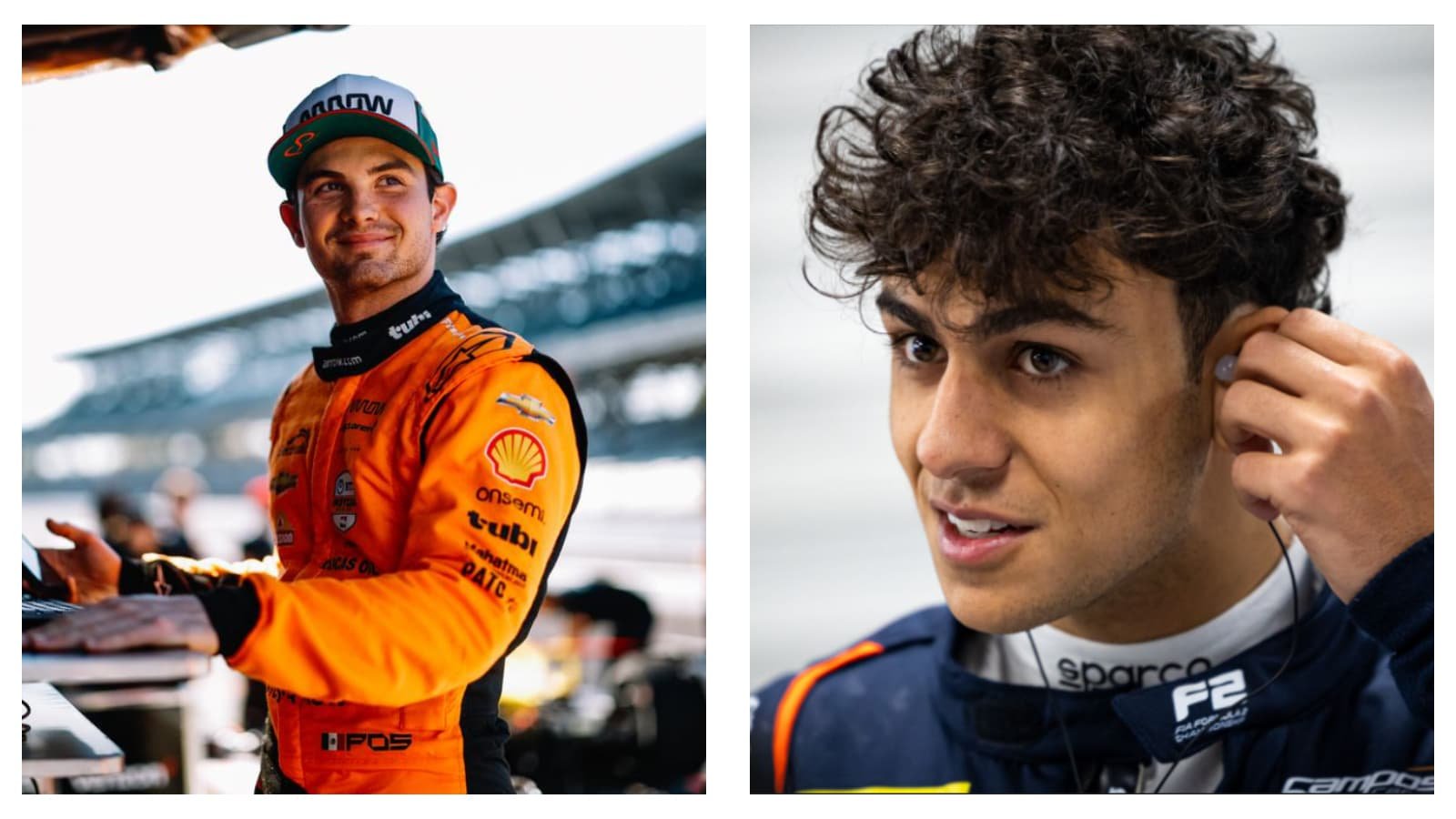
Nine rookie drivers will get to drive an F1 car during FP1 in Abu Dhabi as part of the mandated rookie free practice sessions for all 10 teams on the grid.
Here, Sports News Blitz writer Ayla Vaughan explores which drivers will participate in FP1 and assesses the importance of these rookie sessions.
List of F2 drivers who will drive an F1 car in FP1 in Abu Dhabi
McLaren will welcome Pato O’Ward, the lead driver for their IndyCar team, who has driven an F1 car several times before in similar practice sessions.
Arvid Lindblad, who has already driven twice for Red Bull in free practice, will also be racing as he was recently confirmed to be part of the outfit’s junior team for 2026.
Additionally, Arthur Leclerc will practise alongside his brother for Ferrari – the second time they have done so after an outing in 2025.
Luke Browning once again drives for Williams as he currently sits fourth in the Formula 2 championship, missing out on the title to Leonardo Fornaroli last week in Qatar.
Racing Bulls see the return of 2025 Super Formula champion Ayumu Iwasa after his previous effort with them in Mexico City, with Iwasa coming in from a Japanese category.
Furthermore, Aston Martin will have Cian Shields and Jak Crawford driving their cars in Abu Dhabi, where the Scotsman will be making his F1 free practice debut.
Ryo Hirakawa, the experienced endurance racer, turns out for Haas due to his and the team’s close ties to Toyota, whom he races for in the World Endurance Championship (WEC).
Meanwhile, Alpine will field Paul Aron for his fifth FP1 go-around of the season, the Estonian having completed two on loan at Kick Sauber earlier this year.
Mercedes and Kick Sauber have already fielded rookie drivers in two free practice sessions, so it will be a normal weekend for the team’s F1 drivers.
The significance of rookie free practice sessions
All teams have to run a rookie – that is, a driver with fewer than two grand prix starts – twice in each car during a practice session over the course of the season.
Many rookie drivers get the chance to drive at their home track, providing that it doesn’t clash with their own racing schedule, such as O’Ward who drove in FP1 in Mexico City.
Abu Dhabi is a popular choice given it is the end of the season and FP1 is run in daytime conditions, meaning it is unrepresentative of those in qualifying and the main race.
In addition, Abu Dhabi often has several rookies in FP1 because they have completed their own racing category and this is the last opportunity for F1 teams to fulfill mandated sessions.
Rookie free practice sessions are moreover crucial in assessing talent and promise, with drivers often graduating to the F1 team that they drove for, such as Ollie Bearman for Haas and Kimi Antonelli for Mercedes.
They are also helpful for the teams on the grid to evaluate the drivers’ adaptability and skill level by seeing how they perform under stressful conditions.
Furthermore, F1 teams can test a rookie driver’s readiness for promotion to the top level by seeing how they are in the car and comparing their data to regular F1 drivers.
This was the case for Lindblad who, despite only racing for a year in F2 and F3, was promoted to Racing Bulls in 2026 because the big team saw the potential in the young British driver.
Lastly, rookie free practice sessions allow the driver to get more familiar with the F1 paddock, covering everything from the relationship with race engineers and garage staff to media duties and familiarity with the racecar itself.