Football Performance Metrics and Betting Trends in the Premier League

Modern football is a fast game. Players run hard for 90 minutes. Fans watch every pass, shot, and goal from the stands or on television screens.
Football is not just a game for fun anymore.
It is also a huge business with deep ties to data analysis and global sports-betting markets.
Teams use big data to track player health, passing speed, and total distance run.
Fans use this same data to follow their favourite teams and understand the odds when they place a wager on a weekend match.
How club finances and sponsorships impact modern sports
Professional football clubs need money to buy good players, pay high wages, and fix their stadiums.
Clubs get money from ticket sales, television deals, and main shirt sponsors.
For many years, a top online casino like Casino Legionbet or betting brand would pay millions of pounds to place a logo on a team shirt.
These partnerships provided direct income to mid-table teams trying to compete with rich clubs.
However, new league rules will soon stop front-of-shirt gambling sponsors in the English top flight.
Clubs must now look for new financial deals with technology firms, airlines, and car makers.
Even with new sponsor limits, fan interest in match statistics remains very high.
People love to look at team data before a big game starts on Saturday afternoon.
Key performance numbers across major European football leagues
To understand how teams perform, sports analysts look at goals scored, shots on target, team possession, and yellow cards.
The data below shows typical average match statistics gathered from major European leagues during a standard season.
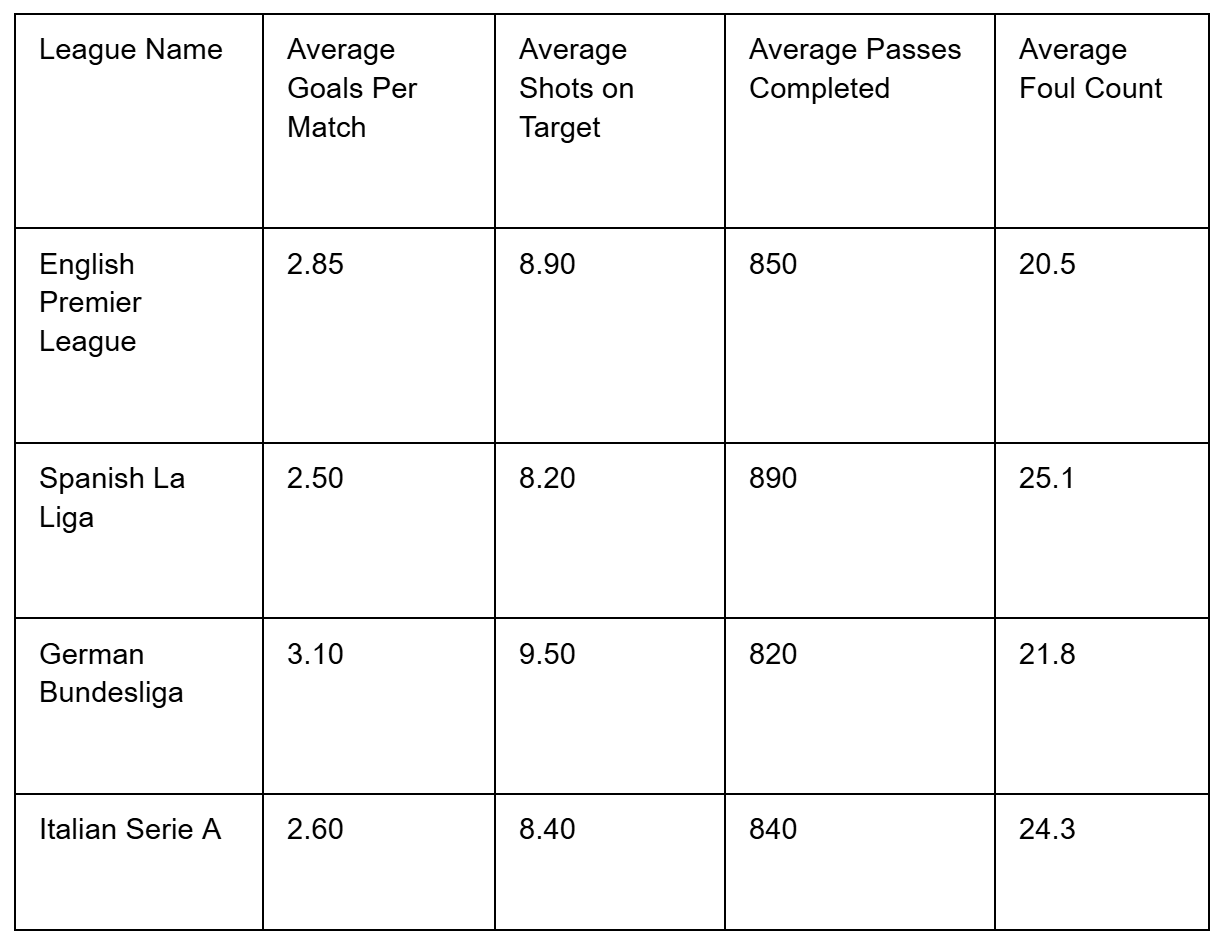
These numbers show distinct playing styles in each country.
The Bundesliga features fast counter-attacks and many goals.
La Liga features patient passing and tactical play.
The English Premier League mixes speed, physical strength, and high pressing, which creates many scoring opportunities for fans to enjoy.
YOU MAY ALSO LIKE: F1 2027 calendar: Shock Monaco Sprint race, Portugal’s return, 10 Sprints, and more
Important statistics that define football match outcomes
Watching a game gives you a quick feel for which team plays better.
However, numbers tell the true story over a full 90-minute match.
Analysts do not just count goals – they count every touch of the ball, every tackle, and every sprint.
Expected goals and shot quality
Expected goals measure the quality of a shot attempt.
A penalty kick has a high chance of becoming a goal, while a shot from far away has a low chance.
Shot distance: Shots inside the six-yard box score much more often than long shots from outside the penalty area.
Header percentage: Headers from crosses score less often than shots taken with a player’s strong foot.
Big chances: Clear one-on-one chances against the goalkeeper yield the highest conversion rate across all top leagues.
When a team creates many big chances, they usually win games over time, even if they get unlucky in one single match.
Defensive strength and clean sheets
A strong defence is just as vital as a sharp offence.
Top clubs invest heavily in strong centre-backs and fast goalkeepers who can pass out from the back.
Tackles won: Winning the ball back in the midfield stops opposition counter-attacks before they start.
Interceptions: Smart defenders read the opponent’s mind and cut off passes without making dangerous fouls.
Clearances: Knocking the ball out of the box reduces pressure during late-game panics.
Teams that keep 10 or more clean sheets in a season almost always finish near the top of the league table.
READ NEXT: NFL 2026: September fixtures and start times as Los Angeles Rams tipped for Super Bowl LXI glory

Simple strategies for following matchday data
If you want to track football like a professional sports reporter, you need a clear system.
Following simple steps keeps you focused on the facts rather than raw emotion.
Pre-game preparation routine
Check the official team line-up one hour before kick-off to see if key players are injured or rested.
Review the recent head-to-head record between the two teams over the past three years.
Look at home and away form as some teams perform much better in front of their local crowd.
Check the weather forecast, because heavy rain or high wind can slow down passing play.
Live match-tracking methods
During the game, keep an eye on how the tactical set-up changes after the first goal.
If an away team scores first, the home team must attack with more players.
This leaves open space for fast counter-attacks.
On the other hand, if a team gets a red card, they will sit deep in their own half to defend the point.
Watching these dynamic tactical changes helps you appreciate the deep strategy behind the sport.
Football remains a simple game at heart, but data helps every fan see the full picture.
YOU MAY BE INTERESTED IN: Wavelight lights up Nakuru: Ben McGrath and Jai Shah on bringing pacing tech and Athletic.net to Kenya’s running culture