Ex-Red Bull strategist reveals how Formula 1 races are really won

Neil Martin is one of Formula 1’s most respected race strategists and a highly sought-after F1 speaker, with more than three decades at the forefront of performance modelling and competitive decision-making.
Across senior roles with McLaren, Red Bull Racing and Ferrari, he helped redefine how teams use data to shape race outcomes, pioneering a simulation-led strategy that is now standard across the grid.
With a background in Mathematics and Computer Science, Martin introduced advanced modelling techniques into F1 long before data science became mainstream. His work in Monte Carlo simulations, risk profiling and scenario planning transformed how teams prepare for uncertainty, turning split-second calls into structured, probability-driven decisions.
In this exclusive interview with the High Performance Speakers Agency, Neil Martin reflects on strategy under pressure, the realities behind race-day decision-making and what business leaders can learn from operating in one of the most intense performance environments in the world.
Q1. Ferrari faced significant strategic criticism during the 2022 season. In your view, were those criticisms justified, or do they overlook the wider pressures and complexities within an F1 team?
Neil Martin: “That’s a really interesting question, on the basis that you probably know I worked for Ferrari for around five years. So I can confirm that, when I left, their strategy tools were state of the art.
“I think what happens is just having the tools is not good enough. You need communication which is good. You need engineers who can make clear, crisp decisions based on that information.
“I think other factors, such as the pressure of the entire nation for Ferrari to win and all sorts of external influences under that pressure, mean people probably are making decisions that I certainly wouldn’t make, is probably the nice way to phrase it.”
READ MORE: F1 analysis: How Ferrari fell short in the 2025 Formula 1 season
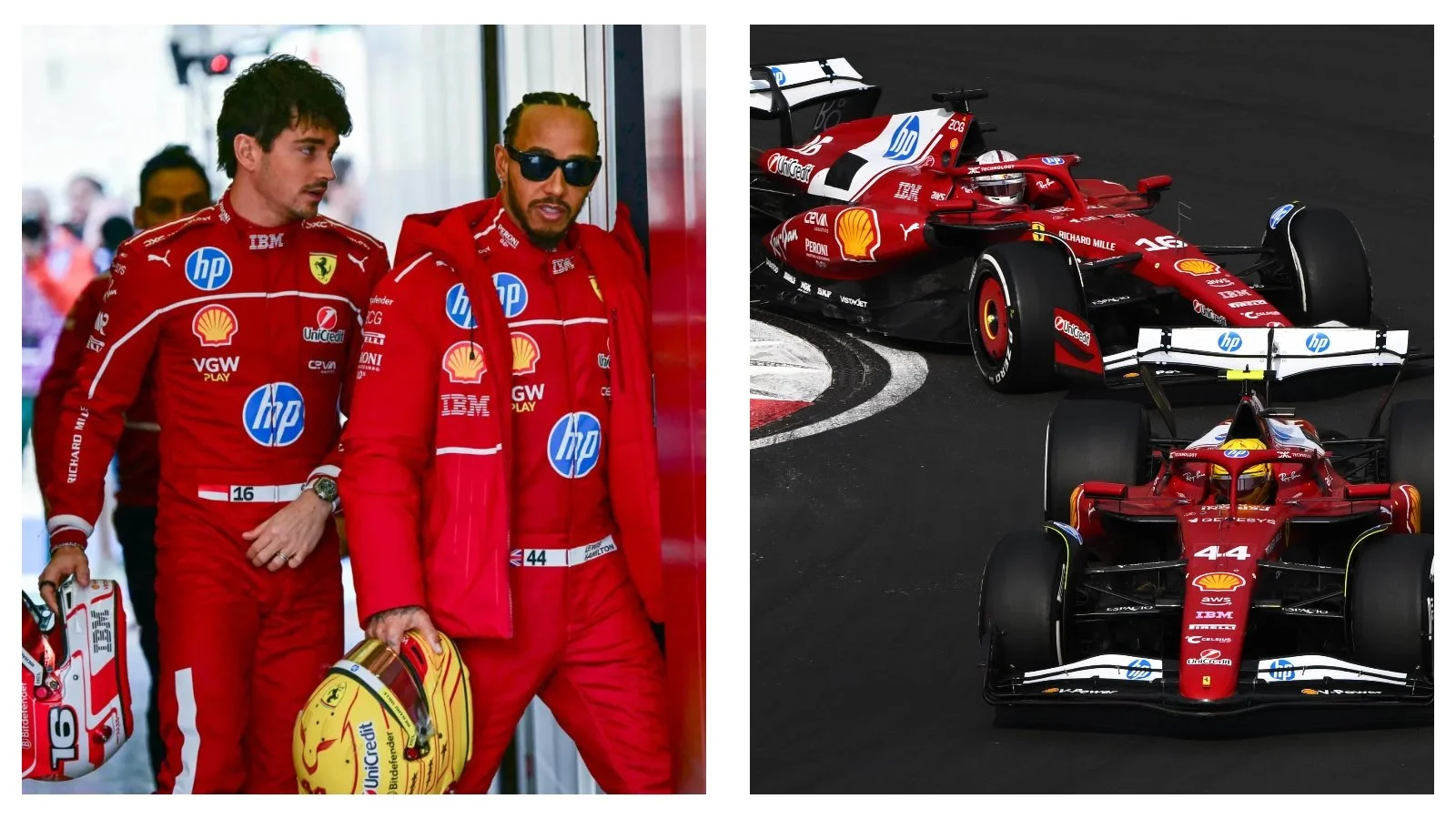
Q2. Race day is what fans see, but strategy is built long before Sunday. How do teams prepare for the strategic demands of a Grand Prix weekend?
Neil Martin: “Yeah, that’s a really interesting question because everyone watches the race, but only ten of personnel actually go to the race, and a lot of things happen behind the scenes.
“In terms of race strategy, it’s all about preparation. Typically, when we’re in season, about a week before we attend a race, what we do is start pulling together the main variables, which include how the tyres degrade over time, how much time you lose in the pit stops, which drivers are better at which circuits, and the underlying pace of the cars and teams.
“We glue all this together to give us a base strategy platform, which will be what’s the quickest way to go from the start of the race to the end of the race, and where should we pit and which tyres.
“Now that’s a level one analysis, and when you do it at that level, it will probably remove maybe a three-stop race or a one stop. It will narrow the field down, but that’s highly inaccurate to actually plan an entire global event on.
“So what you then do is glue all the cars together. You add twenty other vehicles into the model, then you look at traffic patterns, then you look at the probability of the safety car, and then you start running more and more simulations.
“In the end, you run twenty or thirty million different simulations to understand the topology of the race, because there isn’t one solution to a race. There are many ways you can run a race.
“No single strategy is a dominating strategy. It always has weak points, and it has Achilles heels. So the skill is choosing which strategy actually minimises those weak points and places your risk profile.
“For example, there might be two competing strategies that I could offer to a team. One says I can give you exposure to the podium, but if it goes wrong, you’ll finish ninth, tenth or eleventh. Or there’s another type of strategy whereby I almost can guarantee you fourth position, but you’re not going to finish on the podium.
“So you get to control the risk after undertaking all these simulations. Once you’ve got to that level, it’s about the execution. The weakest link is, in fact, the engineers actually on the pit wall and in the pit lane executing the strategy.
“What we tend to do is, much like NASA practice space missions, if we think it’s going to be a safety car-heavy race, we actually use the simulations to generate scenarios that the engineers can practise on in advance. That minimises the likelihood of them making mistakes.
“Further, it means they’re not having to make a decision in ten seconds because, hopefully, if we’ve done our job correctly, they’ll have practised it a few times in the factory even before they get on a plane to go to the race.”
YOU MAY ALSO LIKE: Testing in Bahrain begins: Where to watch F1 pre-season testing?

Q3. At the 2005 Monaco Grand Prix, your real-time strategic call played a decisive role in victory. In such a high-pressure environment, how do you process risk and make clear decisions in seconds?
Neil Martin: “Yeah, I do remember that race rather well, actually.
“The skill of being a race strategist is actually to focus and not be overcome by all of the parameters that are firing at you at the time. It’s remaining calm in highly stressful situations because people act in different ways under pressure, and it inhibits clarity of thought. That’s the key thing, to stay calm.
“How it was done so quickly is that the way you run simulations in a Formula 1 environment is you’re asking the question every single lap: what happens if a safety car comes out now? The safety car might not come out, but you’re running hundreds of thousands of simulations each lap to cater for the likelihood of that event happening.
“That is what we do. We pre-load everything to try and say what if this happens, so that when it does, I wouldn’t say it’s just reading, but it takes a lot of the heavy lifting out of the calculations.”
Q4. During the 2009 Chinese Grand Prix, you opted to keep both cars out in deteriorating weather conditions, a decision that delivered a 1-2 finish. How do you evaluate asymmetric risk and reward in moments like that?
Neil Martin: “Superficially, Red Bull had never won a race, so seeing the opportunity to take a different route and win the race was obviously very appealing and didn’t have much downside.
“That’s something called asymmetric risk. There’s a lot of upside but not much downside. We were expected to lose.
“What drove the decision to actually keep us out was that it was back in the days when refuelling was in the sport, so you literally had to come into the pits to get more fuel, otherwise you would just stop on track.
“That particular decision came when we were behind the safety car at the beginning of the race, and everyone was pitting to get more fuel on board to make sure that when the race did finally start, they’d have a full tank of fuel to go deep into the race.
“However, when I looked at it, I noticed that what those teams had missed was the effect due to spray and visibility. Being at the front, you had no spray, and the separation between the cars going full speed, our analysis showed, was like two seconds.
“If you pitted and went to the back with twenty cars, you’d give away forty seconds in race time. So when we analysed it live during the race, we were like, actually, if we’re just in the lead for four or five seconds, pulling away in clear air, not being in the spray, plus the separations, we’re going to catapult ourselves up the order.
“That’s exactly what we did, and I think we stayed out for something like ten laps with both cars. By then most of the race was done because everyone else was lost in the spray behind.”
ALSO ON SNB: Premier League news: Five key talking points around the relegation battle as Thomas Frank sacked

Q5. You were an early pioneer of advanced data modelling in F1. How can businesses apply similar analytical principles to gain a competitive advantage today?
Neil Martin: “Yeah, again, that’s where my career is heading, in that what we saw, we didn’t know at the time, but we had a thirty-year head start on the digital transformation journey that other businesses didn’t. We were doing data science before it had a label.
“What I’m finding now when I go into businesses is that a lot of them have a lot of data, but some of it’s siloed, some of it’s in Excel. The Excel trendline is my favourite nemesis because if anyone right-clicks and puts an Excel trendline on a document, then puts it in a PowerPoint, it’s suddenly got a lot of power.
“In reality, if the data is flawed, then that graph is flawed, but no one in the PowerPoint challenges it as much as they should.
“The important thing is understanding that businesses have a lot of data. Phase one is how do you remove the pollution, how do you rationalise it, how do you then organise the company and processes to best exploit it to give them a competitive advantage?
“Data is the new currency, whatever business you’re in. If you don’t exploit it, your competitors will, and one day you’ll wake up and you’ll fall very behind.”
This exclusive interview with Neil Martin was conducted by Tabish Ali of the Motivational Speakers Agency.
READ NEXT: Why motorsport is leading the way on sustainability and data, according to Karun Chandhok