Soccer analysis: Japan’s World Cup dream - Why the Samurai Blue are the ultimate dark horses
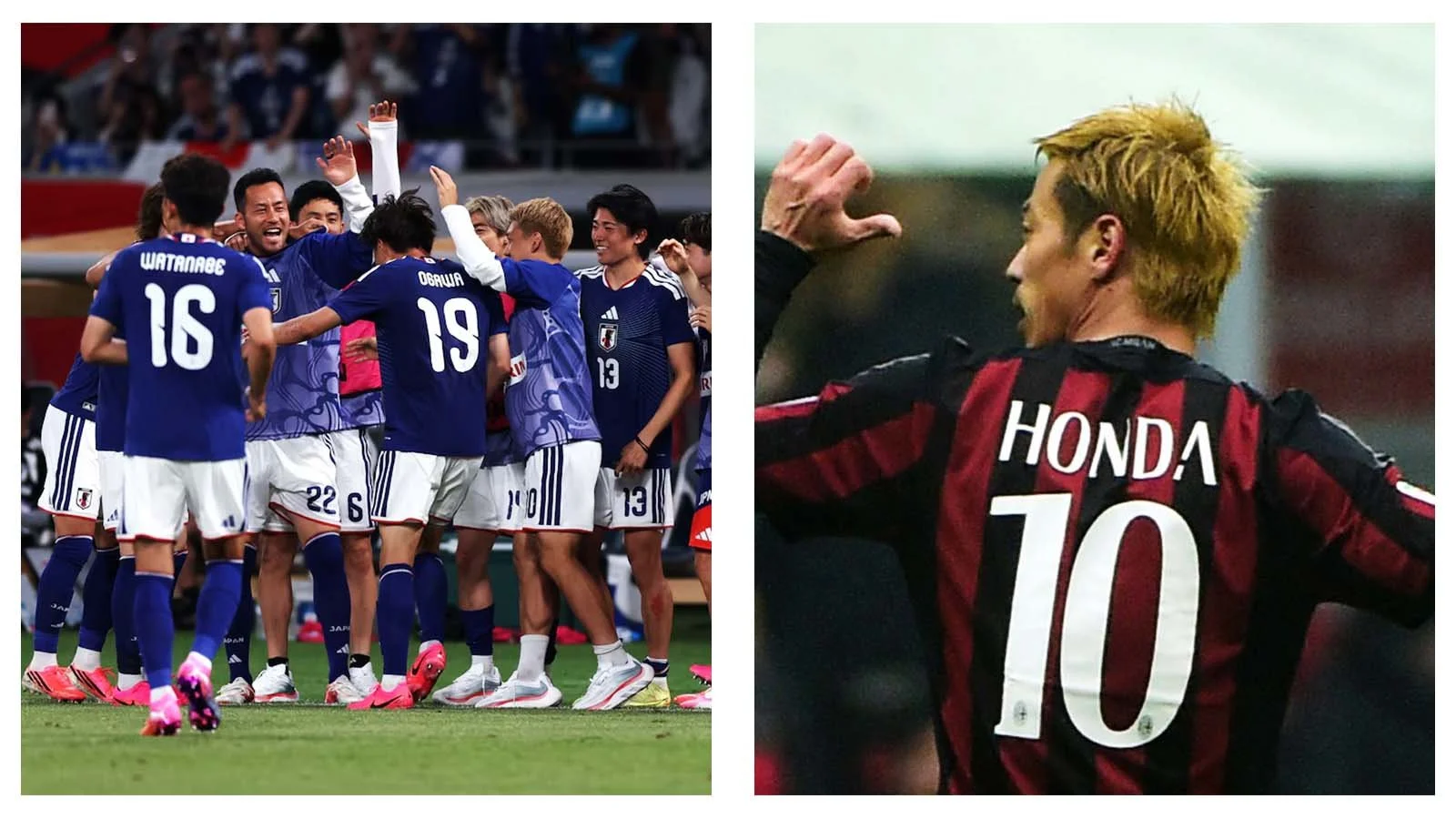
For decades, Japan have been viewed as an emerging football nation: competitive, technically gifted and tidy on the ball.
But they have also been perceived as ultimately lacking the physical power, ego mindset and conviction to truly challenge the traditional powers.
However, heading into the 2026 FIFA World Cup, the Samurai Blue may be closer than ever to breaking that narrative, writes Sports News Blitz’s Shuei Ishii.

A generation built in Europe
In the 26-man Japan team that headed to the 2010 FIFA World Cup, only four played in Europe.
In the current 26-man team heading to the 2026 World Cup, however, 23 currently play in Europe.
Not to mention the ones that are currently playing in Japan have previously played in Europe before, such as Yuto Nagatomo, who was at Italian powerhouse Inter Milan for seven years.
12 of the players in the lineup for the upcoming World Cup are also currently active for clubs in the traditional “top five leagues” in Europe, such as the Premier League (England), Ligue 1 (France), Bundesliga (Germany), La Liga (Spain) and Serie A (Italy).
And this is without including top players such as Kaoru Mitoma and Takumi Minamino, who play for Brighton (England) and AS Monaco (France).
Japanese players no longer fear facing players from different continents.
No longer undersized
East Asian countries like Japan often get outmuscled and overpowered on the pitch due to their small stature, especially when it comes to defending.
In the 2010 World Cup, the average height of the backline for Japan was 178cm. In the 2026 World Cup, the average height is now 186cm.
Players such as Suzuki Zion (190cm), Takehiro Tomiyasu(187cm), Hiroki Ito(188cm) and Ko Itakura (188cm) should eliminate much of the physical worries facing Japan.
READ MORE: Shocking hires: The Premier League's worst appointments this season and what's gone wrong
A striker with an ego
Japan have always produced talented midfielders, wingers and wing-backs. Famous examples include Shinji Kagawa, who played at Manchester United, Keisuke Honda, who wore the renowned number-10 shirt for AC Milan, and Takehiro Tomiyasu, who was pivotal in the 2022 Arsenal squad.
In the back, middle and wings of the pitch, Japan have consistently shone globally. Basically, every single position has produced talent, every position apart from the striker.
The striker position in football is where teams mostly get all their goals from. It is a position that requires confidence and ruthlessness, and in a sport where a single chance often decides the outcome, having a striker with an ego takes you far.
Japan have lacked in that area for some time, but those times may finally be over.
Ayase Ueda. Top scorer in the Eredivisie (Netherlands) this season with 25 goals for Feyenoord, even scoring four goals in one game.
His record in the national team has also been impressive, overpowering defenders to score headers against teams like Brazil, Colombia and Germany.
He is the first-ever Japanese player to become an outright top scorer of a major European top-flight league. Ueda’s presence in the team will definitely be a handful for World Cup defenders.
BETTING ANALYSIS: 10bet review - Markets, odds and best free bets
Beating giants is nothing new
Japan’s run in the last World Cup proved that they are more than capable of beating global powerhouses.
The Samurai Blue stunned the world by beating both Germany and Spain, despite being drawn into what many labelled the "Group of Death" due to the tough nature of their opponents.
Their Round of 16 campaign came to an end only after a penalty shootout defeat to Croatia, having matched and, at times, even outplayed the eventual semi-finalists over 120 minutes.
Outside of the World Cup, they have even beaten the likes of Brazil, England and Germany (again) in the past two years. In fact, they haven’t lost a single international game since September of last year, despite playing non-Asian countries exclusively.
If anything, given those achievements, a deep run in the 2026 World Cup should be viewed as a realistic expectation rather than an unlikely surprise.
READ NEXT: World Cup 2026: 10 players to watch in Group F - Cody Gakpo, Kaishu Sano and more