Shocking hires: The Premier League's worst appointments this season and what's gone wrong
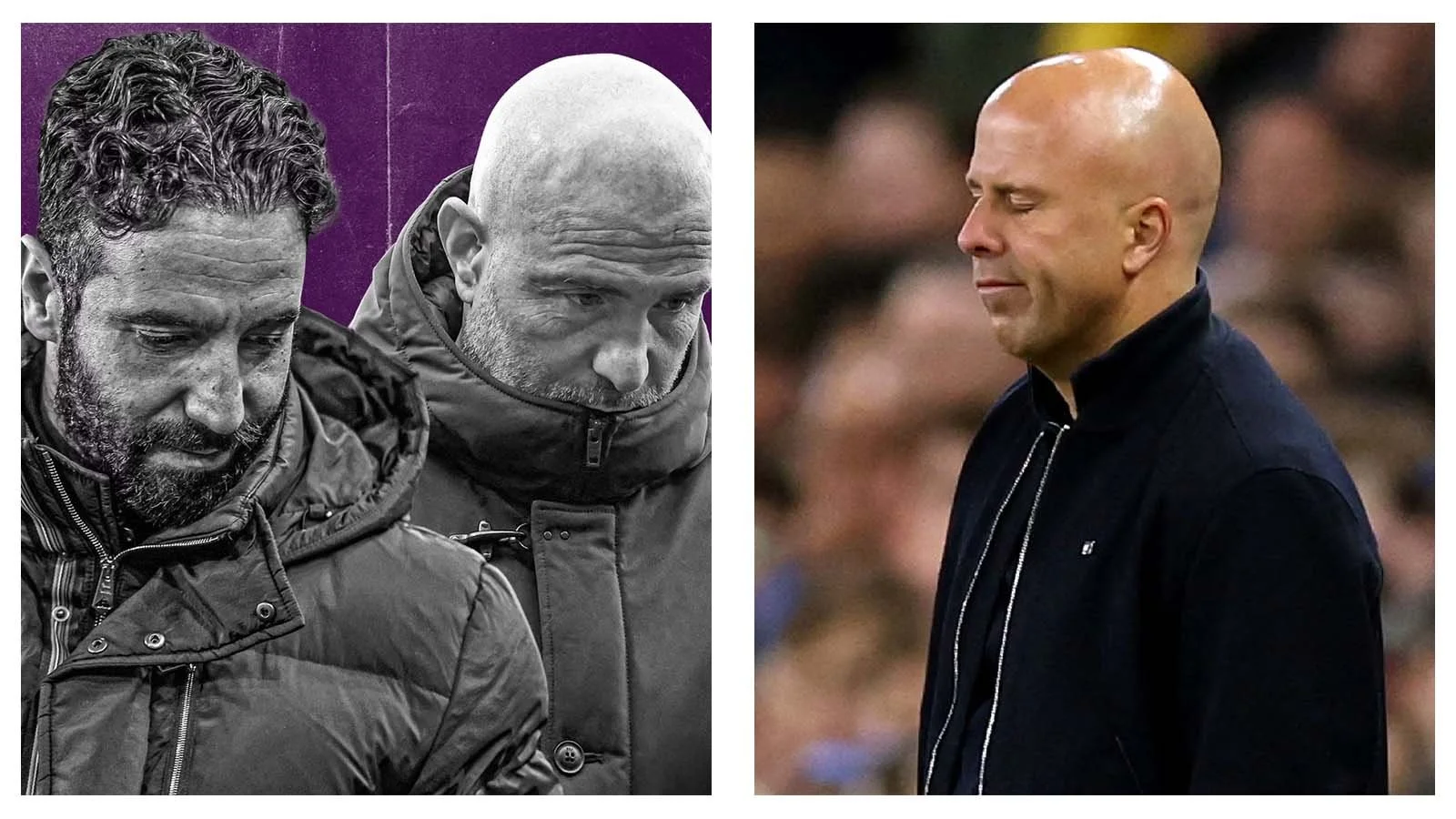
It has been a season of managerial chaos in the Premier League.
Trigger-happy owners, panic appointments, and spectacular misfires have defined the 2025/26 campaign. Here is a look at the worst of the lot.
Ange Postecoglou, Nottingham Forest: 39 days in charge
Postecoglou arrived at the City Ground having just led Tottenham to Europa League glory, ending a 17-year wait for a major trophy.
It was a remarkable achievement, one that deserved better than it got. But his overall record at Spurs, including that catastrophic league finish, made his sacking feel inevitable rather than entirely unjust.
What was harder to justify was what followed. Postecoglou replaced Nuno Espirito Santo, a manager who had just guided Forest to seventh place and European football, and who was enormously popular at the club.
Taking over from a beloved manager at a club run by an owner as volatile as Evangelos Marinakis was always going to be a thankless task.
For those tracking the chaos as it unfolded, even the usual noise around free sports bets and matchday promotions couldn’t distract from what was happening on the pitch.
He went winless in all eight matches, including a humiliating League Cup exit to Championship side Swansea, and was dismissed 19 minutes after a 3-0 home defeat to Chelsea.
Marinakis had already left his seat before full time. A 39-day reign ended with a 39-word statement. Brutal does not begin to cover it.
READ MORE: World Cup 2026: 10 players to watch in Group F - Cody Gakpo, Kaishu Sano and more

Sean Dyche, Nottingham Forest: 114 days in charge
If the Postecoglou hire raised eyebrows, bringing in Dyche to replace him was at least logical in theory. His boyhood club, a grounding in relegation battles, and a no-nonsense approach that might steady a ship taking on water. And for a time, it worked.
Forest beat Liverpool 3-0 in November, among other encouraging results, and Dyche nearly doubled the points-per-game average he had inherited.
But the problems ran deeper than any single manager could fix. Forest had spent £180m in the summer, largely on attacking players, and were still averaging fewer than a goal a game. A three-game run against Crystal Palace, Leeds, and bottom-club Wolves yielded just two points.
That proved enough for Marinakis, who announced the decision at 12:30am the morning after a goalless draw with Wolves.
The players had reportedly turned on Dyche behind the scenes. He left with the club three points above the drop zone, and the dressing room fractured.
In any other season, at any other club, Dyche's record would have kept him in a job.
Thomas Frank, Tottenham Hotspur: 225 days in charge
Frank arrived from Brentford in the summer, replacing Postecoglou and inheriting the unenviable challenge of following a manager who had just won a European trophy.
He was bought out of his contract at Brentford for around £10m and handed a three-year deal. The early signs were not bad. Spurs qualified from their Champions League group with relative comfort, losing just once in eight games.
But the league form was another story entirely. Frank managed just two wins in his final 17 Premier League matches.
A public criticism of the Spurs fanbase after a home loss to Fulham in November was the beginning of the end, and the "boring, boring Tottenham" chants that followed told their own story.
By the time Newcastle beat them at home in February, Frank's position was untenable.
He was sacked inside the first 12 months of a three-year deal, costing the club a reported £8m in compensation on top of the £10m it had cost to prise him from Brentford. An expensive and thoroughly miserable experiment.
YOU MAY ALSO LIKE: Serie A news: AC Milan’s season leaves more questions than answers

Igor Tudor, Tottenham Hotspur: Interim disaster
If the Frank appointment was questionable, what followed was farcical. Tudor was brought in as interim head coach until the end of the season, with the stated mandate to bring "organisation, intensity and competitive edge" and drag Spurs clear of relegation.
His track record of short-term stabilisation at clubs like Juventus and Lazio made him an understandable choice on paper.
In practice, it has been a disaster. Tudor lost his first four matches, saw a brief two-game uptick quickly undone by a 3-0 thrashing at home to fellow relegation battlers Nottingham Forest, and has now left by mutual consent.
Spurs sit one point above the relegation zone. Players did not buy into his methods. Even the most charitable reading of his time in charge is that he arrived too late to fix problems that run far deeper than the dugout.
Tottenham may well bet relegated before a permanent manager gets a chance to start fresh.
Liam Rosenior, Chelsea: Still in charge, but time is running out
Liam Rosenior arrived at Stamford Bridge in January, replacing Enzo Maresca on a remarkable six-year deal after joining from BlueCo sister club Strasbourg.
The early signs were genuinely encouraging. Chelsea beat Charlton and Hull in the FA Cup, qualified for the Champions League knockouts by beating Pafos and Napoli, and picked up a string of Premier League wins over Crystal Palace, Brentford, West Ham, and Wolves.
The new manager bounce was real.
Then it fell apart. Back-to-back 3-0 defeats to PSG and Everton within the space of a few days summed up a brutal recent run that also included a Champions League exit on an 8-2 aggregate and further league losses to Newcastle and Arsenal.
Chelsea, who were third when Rosenior came in, are now sixth and six points behind Aston Villa in fourth. Reports suggest missing out on Champions League football would cost the club over £100m, and speculation around vice-captain Enzo Fernandez, heavily linked with Real Madrid, is only adding to the pressure.
The board appear to be holding firm for now, and there is a reasonable argument that Rosenior inherited another manager's squad mid-season with limited time to implement his ideas. But in a season full of bad hires, his story may not be finished yet.
READ NEXT: Players who scored in both the semi-final and final of the same World Cup