Six Nations third round winners and losers: Ireland and Scotland joy, woe for Wales
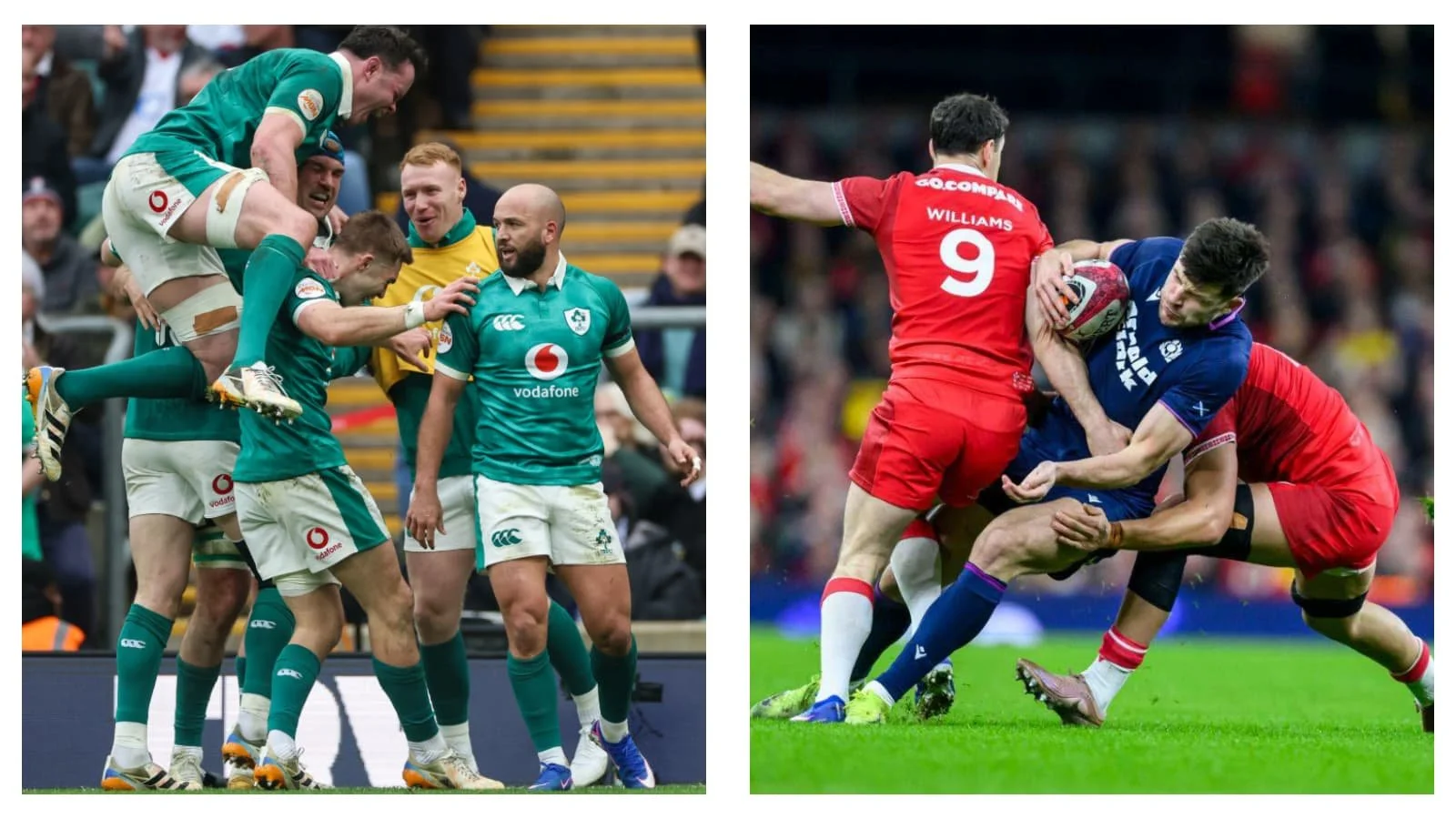
The Six Nations third round kicked off with one of the oldest international rugby rivalries, England vs Ireland.
Expectations from the England fans were high as they looked to bounce back from a disappointing loss at Murrayfield the week prior.
However, Ireland had other plans and secured a record-breaking victory over England at the Allianz Stadium in Twickenham, winning 42-21 against Steve Borthwick’s shell-shocked hosts.
Wales played Scotland next with a much-improved home-crowd attendance in Cardiff compared to the week prior.
Scotland were the favourites going into the match, but an inspiring display from the Welsh saw the game go down to the wire, resulting in a closely contested 26-23 win for the Scots.
The final game of the weekend was between France and Italy in Paris.
With the Italians developing their game year-on-year, even when up against the formidable French, it was anticipated to be a fairly competitive game.
In the end, the scoreline doesn’t really reflect the level of performance Italy put in against their imperious hosts, with the match finishing 33-8 to France.
Here, Sports News Blitz’s rugby writer James Corrigan outlines his winners and losers from the weekend’s action.
Winners: Ireland
Ireland secured a record-breaking win at Twickenham, scoring a total of 42 points – the most they have ever had in the storied arena.
Andy Farrell’s Ireland troops dominated the vast majority of the game, coming out on top in almost all areas of the game.
Their standout area of impact was the speed to the breakdown to disrupt England’s ball, winning seven turnovers in this area to their hosts’ one.
Ireland’s supreme kicking game and high-ball win rate from their back three was far superior to England’s and another major factor within the game that led to the win.
Jamison Gibson-Park showed his world-class abilities in this match-up, scoring the first try with some quick thinking from a tap and go, dictating the flow of the game, and always remaining one step ahead of the English.
The battle of the 10s was an area England will have expected the experienced George Ford to come out on top.
However, Ireland made a change to their starting line-up from the previous week, deciding to elect Jack Crowley at stand-off, who had an impressive game.
He converted four of the five tries and put a further three penalties through the posts, tallying 17 points for the away side.
Losers: England
The English supporters were anticipating a potential landslide win over the Irish as they looked to correct the faults from their loss against Scotland.
England worked their way into good attacking positions, with some good build-up play coming from centre Fraser Dingwall, one of England’s only standout players in the match.
They ultimately fluffed their lines when it came to executing these attacking plays, though.
Two uncharacteristic kicks to touch from Ford abruptly ended what should have been two attacking lineouts close to the Irish try line.
After being unsuccessful in coming away with any points from their early visits to the opposition’s 22, Ireland took control of the game and dominated the remainder of the first half.
England’s only consistent area of dominance throughout the match was at scrum, where Ellis Genge managed to pick up some penalties.
England made three changes in the first half, something not typically seen at any level of rugby, especially Test-match level.
However, after Alex Mitchell picked up an injury and two very below-par performances from Luke Cowan-Dickie and Freddie Steward became apparent, replacements were made in the hopes of changing the momentum in the game.
England did manage to score a try on the brink of half-time, making the score 22-7 to Ireland, giving the home fans some hope that they could get back into the game in the second half.
Unfortunately for them, it was more of the same from both sides, an early try in the 42nd minute from Dan Sheean quickly extinguishing any hope of a comeback for the home side.
England did manage to get two more tries through the likes of Ollie Lawrence and back-row replacement Sam Underhill, but it was not enough to overcome an impressive Irish performance.

Winners: Scotland
Scotland travelled to Cardiff on Saturday, where they faced Wales in front of over 70,000 fans.
It was a much-improved attendance from the week prior, when the Principality welcomed only 57,744 fans against France – an all-time low in the Six Nations for Wales.
The away side were aiming to make it back-to-back wins after an impressive victory over England the week prior.
However, they started the game poorly by only managing to score an unconverted try from Kyle Steyn, ending the first half down 17 to 5.
A world-class performance from a world-class player was the key in the second half as Finn Russel scored the first points after a long phase of play that included a smart dummy move.
After conceding three points from an unnecessary penalty, some quick thinking from Russell at kick-off saw Darcey Graham breach the sleeping Welsh defence to score another try for Scotland.
Another successful conversion kick from Russell put Scotland within four points of the home side with 22 minutes left on the clock.
It wasn’t until the 74th minute that Scotland took the lead for the first time in the match after a controversial driving maul powered them over the line.
Another successful conversion from Russell tallied the last points of the match, completing an excellent game of rugby and a great win for Scotland to keep alive their dreams of winning the Six Nations.
Losers: Wales
A spirited home crowd built up an intimidating atmosphere in the Principality with the hopes of causing one of the upsets of the tournament so far.
Wales, who made four changes to their starting line-up from the previous match, looked like a completely different side in the first half.
This was despite Joe Hawkins picking up a yellow card only four minutes into the match due to shoulder-to-head contact.
Wales still managed to power over the line via Rhys Carre for the first try of the match nine minutes in.
Wales continued to pile on the pressure, even after conceding a well-executed training ground try from Scotland.
Thomas Willams caused the Scottish defence numerous problems with his fast style of play and overall control at scrum-half.
Wales managed to cross the line again through Josh Adams after a good phase of attacking rugby.
They ended the first half with an impressive scoreline of 17 to 5.
Unfortunately for Wales, they were unable to hold out in the second half and were victims of a hard-fought comeback win from the Scots.
However, the performance indicates massive improvement in the quality of rugby they are playing, and the fans will expect more of the same for the remainder of the tournament.
YOU MAY ALSO LIKE: Rugby union analysis: Is Henry Pollock a future England legend, or a loud-mouthed flash in the pan?

Winners: France
France welcomed Italy to Paris for what was anticipated to be an exciting game.
Despite major improvements to the Italian side over the past few years, the home side were still favourites in wanting to maintain their Grand Slam dream.
It didn’t take long for France to strike through the 2025 Six Nations player of the tournament Louis Bielle-Biarrey, who touched down Antoine Dupont’s kick with only three minutes gone on the clock.
France kept the pressure on Italy and thanks to some big carries from the forwards and centres, they found themselves in a strong position to crash over through second rower Emmanuel Meafou.
France scored another before conceding one of their own, finishing the first half 19-8 up.
In contrast to the first half, there was no early try in the second as a strong contest between the two sides did not allow France to get a dominant hold on the game.
After relentless French pressure, Italy lost Louis Lynagh to the sin bin.
Given the extra man on the field, it only took France a minute to score another and regain control of the game.
France saw the game out from this point on, getting another try before the full-time whistle to show their class and taking them one step closer to their fifth Grand Slam title.
Losers: Italy
It’s no surprise to anyone now that Italy are not a team to be messed with and are capable of causing an upset, even against great sides like France.
Unfortunately, this match wasn’t that, but Italy did put up a competitive display at the home of arguably the best team in the world.
After a poor start saw them concede three tries in the first half an hour, Ange Capuozzo – the exciting Italian full-back – took advantage of a French error on their own try line to score probably the easiest try of his international career.
Italy played a spirited and motivated first 30 minutes in the second half, finding their way through the French defence numerous times after some very strong carries from Lynagh.
In the end, they just lacked the composure to finish off any of these chances and break through France’s impressive scramble defence.
France then finished the game strongly by putting the scoreline out of Italy’s reach.
The visiting team and their fans will still be hoping that they can beat their best performance in the Six Nations by winning their two remaining matches against England and Wales.
If they manage to do so, it will be the first time Italy have won three games in the Six Nations as well as their first win over England in this tournament.
YOU MAY BE INTERESTED IN: What elite rugby reveals about leadership under pressure