Paralympic legend reveals what businesses still get wrong about inclusion
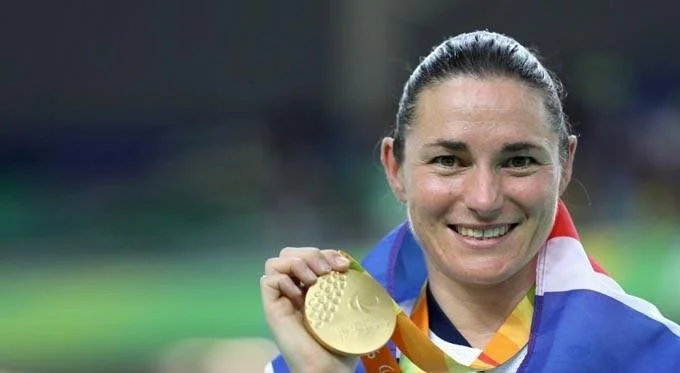
Dame Sarah Storey is widely recognised as Britain’s most decorated Paralympian, with an extraordinary career spanning swimming and cycling and a record 30 Paralympic medals, including 19 golds.
Born without a functioning left hand, she has spent decades competing at the highest level of elite sport while also advocating for greater accessibility and representation for disabled athletes.
Beyond her achievements in sport, Storey has become a respected diversity & inclusion speaker, sharing lessons from her career about resilience, opportunity and equality.
Through her work mentoring athletes, leading development programmes and speaking globally, she highlights how inclusive environments allow people from different backgrounds and abilities to thrive and perform at their best.
In this exclusive interview with the Diversity & Inclusion Speakers Agency, Sarah Storey reflects on the lasting impact of the Paralympic movement, the lessons businesses can learn from sport about inclusion, and how organisations can cultivate environments where everyone has the opportunity to succeed.
Q1. London 2012 was widely described as a moment that could transform the lives of disabled people. Looking back, what impact did the Games realistically have?
Sarah Storey: “London 2012 was set up to be the Games that transformed the lives of all disabled people. I said at the time that I thought that was a relatively unrealistic expectation of a sporting event.
“We knew the Paralympic Games had the opportunity to transform the lives of people with disabilities who are athletes, but translating that into a wider social environment was always going to be a challenge.
“What we found after those Games was that many people assumed everyone with a disability would be on some kind of athletic trajectory. That does not happen with able-bodied people, so why should it in the disabled community?
“There were some unrealistic expectations, but I also think the Games paved the way for many of the discussions we are having today.
“They allowed us to highlight the challenges people face and continue those conversations. There is still a huge amount of work to be done to make sure people with disabilities have the same access to opportunities and are treated the same in all sorts of environments.
“The platform that London gave us to have those conversations was incredibly valuable. Athletes have been able to talk about what has changed and what has not, and often it helps to be brutally honest about those things.
“As athletes, we continue to strive and push forward to make sure inclusion and diversity remain at the forefront. Everyone has something to offer, and opening that conversation to more people is a valuable tool for all of us.”
READ MORE: When the Margin for Error Is Zero: Lewis Pugh on Peak Performance
Q2. Sport has often led the way in creating inclusive opportunities. What lessons can businesses take from the way sport approaches integration for disabled people?
Sarah Storey: “If I were to offer three ways the business world could utilise the example of sport for integration, the first would be how we organise competitions.
“We try to replicate the same conditions and situations regardless of whether an athlete has a disability.
“In a workplace environment, that means providing opportunities for people who may need additional considerations and making those allowances where required. At the same time, those people are still delivering a role and an outcome for the business.
“It might mean additional support within the desk environment or the office environment. It might mean ensuring they have access to facilities such as kitchens for break times. It might mean support with travelling to and from the workplace.
“But when it comes to the role itself, it is the same role. People with disabilities value being treated and judged in the same way as someone without a disability.
“Secondly, it is about making sure the trajectory for people is the same. Disabled people should not have to lower their ambitions. They still want to challenge themselves and have the same opportunities to thrive.
“Thirdly, it is about celebrating success. We do not always get this right in sport because we often focus on a very small number of people.
“If you celebrate the success of everyone and ensure people feel their contribution is valued and that they are part of a bigger team, that is another lesson businesses can take from sport.”
ALSO ON SNB: From Brahim Diaz to Sergio Aguero: Five Panenka penalties that went horribly wrong
Q3. You have spoken about the importance of the team behind your success and longevity as an athlete. How have you built and maintained that support system?
Sarah Storey: “Team is a word we use in many different ways. Often, people see an individual athlete and assume the team is just that one person.
“But team does not only mean the person you see executing an event or activity. It includes the people behind the scenes who make things happen.
“For me, my team has been built around loyalty and people I can depend on. Many people are like that. They want to know that the people they work with understand where they have been, what they have been through, and their history as an athlete and as a person.
“Since I started my sporting career, I have not had that many coaches. I had one coach for the first four years of my career, another who overlapped with that period, and then a second coach who supported me during the latter half of my swimming career.
“Since I started cycling, I have worked with the same team. As I have grown older, that consistency has given me confidence in those people.
“While I am relatively self-coached in the sense that I decide my day-to-day training, those people act as an advisory board. They advise me as a person and as an athlete on how to make the best of the situation I find myself in.
“It is a valuable way of working. Knowing who your mentors are, who supports you when you are not in the room, and who can guide decisions.
“It also means knowing who to call when you need advice or support, and who you can rely on when things are going well and when they are not.
“Building a team around you and knowing who those people are gives you confidence when you go out to perform. I am incredibly grateful to my team for staying with me for such a long time.”
YOU MAY ALSO LIKE: 2026 Chinese Grand Prix: Sprint format and Mercedes-Ferrari battle headline Shanghai
Q4. A “winning mindset” is often discussed in both sport and business. From your experience, how can organisations begin to cultivate that mindset within their teams?
Sarah Storey: “Cultivating a winning mindset is one of those discussions that could last for hours.
“A winning mindset is an incredibly individual thing. The starting point is to think about where you want your end result to be and what your ambitions are.
“It is important to have a variety of ambitions. If you achieve one, you need to know where you are going next.
“From there, you work backwards and identify the stepping stones that will create your pathway towards that ambition and success.
“This process requires flexibility in thinking. You have to be open to the possibility that there may be another way of reaching the next step on the journey.
“It is also about understanding what motivates the people you work with. Think about what makes them tick, what they enjoy doing, and what areas need development.
“Create a map of the changes you want to make, but introduce one change at a time. If something does not work, you know exactly what caused the problem.
“A winning mindset is always about moving forward and growing. Sometimes that growth requires rest.
“Being able to pause and take a break is vital, particularly in a work environment. Many people struggle to stop working when they should, always thinking there is one more thing to do.
“Part of a winning mindset is recognising when enough is enough for the moment. Even if you have not reached where you expected to be, there will be another way to reach that point on the journey.
“It is also important that the process allows for enjoyment. What you are doing should be something you are passionate about.
“Having that passion and being able to share that enthusiasm with the people around you is crucial.
“So my advice would be to have a destination in mind, but create joy in the journey of getting there. That nurtures and consolidates a winning mindset, because there is more than one way of winning and you simply have to find the right way for you.”
This exclusive interview with Sarah Storey was conducted by Tabish Ali of the Motivational Speakers Agency.
READ NEXT: MMA news: UFC Freedom 250 – Can Alex Pereira beat Ciryl Gane to become first triple champion?