2026 Chinese Grand Prix: Sprint format and Mercedes-Ferrari battle headline Shanghai
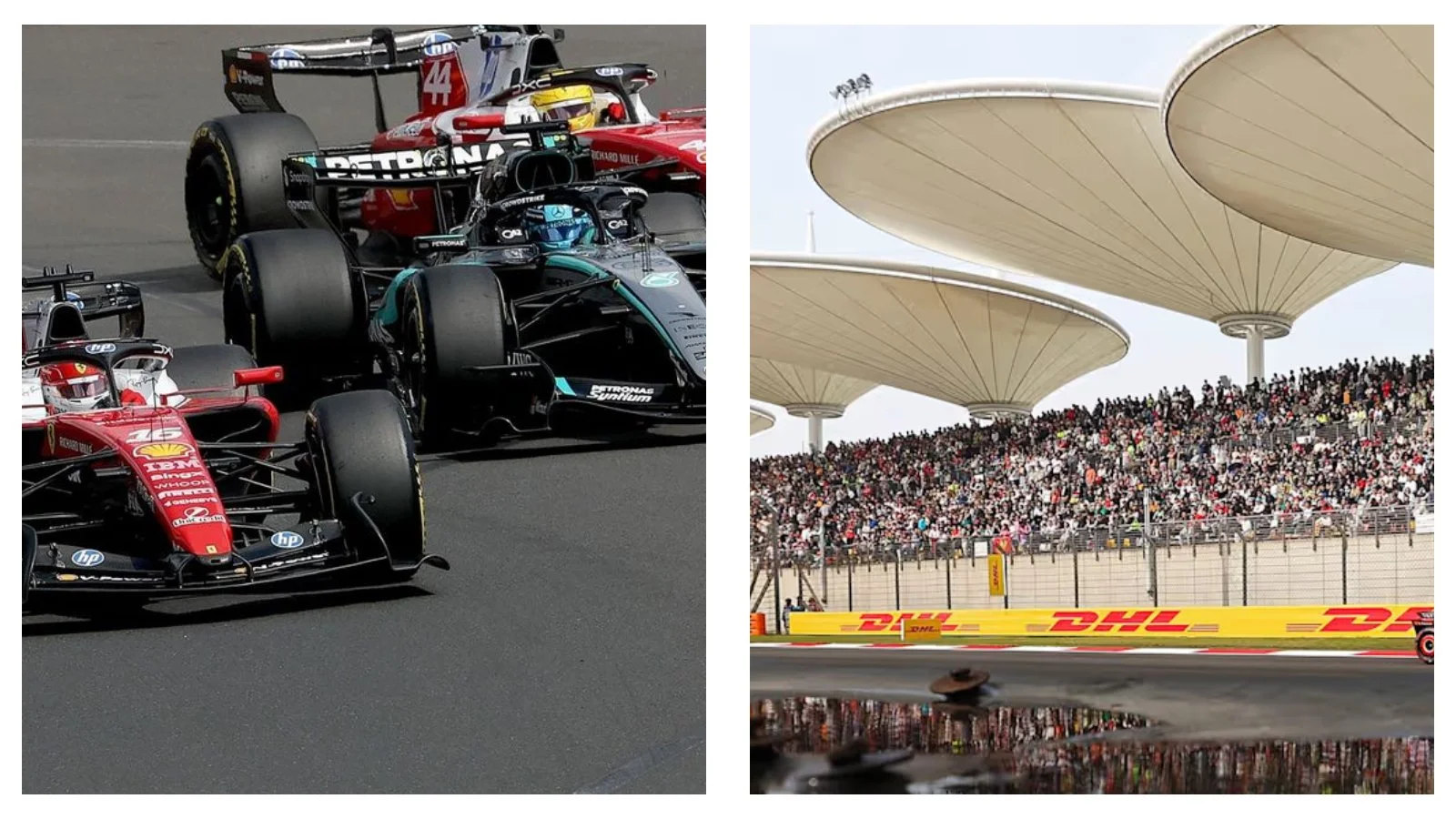
F1 returns to Shanghai this weekend for the Chinese Grand Prix, and the 2026 edition could be one of the most unpredictable races of the season.
With the sprint format compressing the schedule and limiting practice time, teams face a high-pressure weekend where small mistakes could have major consequences.
Here, Sports News Blitz writer Ella Magyar breaks down the key storylines ahead of the 2026 Chinese Grand Prix.
Sprint weekend set to shake up Shanghai
The Chinese Grand Prix will once again feature F1’s sprint weekend format.
Instead of the traditional three practice sessions, teams only get one hour of practice before competitive sessions begin.
After Friday’s practice session, sprint qualifying determines the grid for Saturday’s sprint race, a shorter race that awards the top eight finishers the all-important championship points.
The biggest challenge is the lack of preparation time.
With just one practice session, teams must quickly gather their data and lock in their setups before parc fermé restrictions prevent major changes.
Last year’s sprint race saw drivers from three different constructors claim the podium positions. Ferrari’s Lewis Hamilton took the top step, followed by McLaren’s Oscar Piastri in second and Red Bull’s Max Verstappen in third.
With last year’s results, no mandatory pit stops, and a shorter distance, this highlights how the sprint format can produce intense and unpredictable racing.
Benefits of a sprint weekend
Despite the challenges a sprint race presents for teams, the format offers advantages for both fans and the championship narrative.
With competitive sessions beginning on Friday, the action starts earlier in the weekend and keeps the pressure high from the start.
For the teams and drivers, the sprint race can also provide valuable insights into how their cars perform in race trim, allowing teams to gather data on tyre performance, race pace, and overtaking opportunities before Sunday’s main race.
For the fans, the format simply delivers more action with two qualifying and race sessions.
In a championship that often hinges on small margins, those extra opportunities for points can have a significant impact.
Shanghai International Circuit - A unique challenge
The Shanghai International Circuit has been a staple of the F1 calendar since it first hosted the Chinese Grand Prix in 2004.
At just over five kilometres in length, the track combines technical corners with long straights, creating multiple overtaking opportunities.
One of the most distinctive features of the circuit is its tight opening sequence of corners, making the start of the race particularly chaotic when the field is tightly packed.
Later in the lap, the circuit opens up with long, sweeping corners and heavy braking zones.
The back straight between turns 13 and 14 stretches 1.2 kilometres, making it one of the longest straights on the calendar.
This section is usually the prime overtaking opportunity. However, with the new regulations, battery management on the straight will be critical.
YOU MAY ALSO LIKE: Australian GP takeaways: Mercedes set the benchmark, Ferrari close behind and Arvid Lindblad shines

Mercedes vs Ferrari
One of the most exciting storylines heading into the Chinese Grand Prix is the developing battle between Mercedes and Ferrari.
The two appeared to be the closest match at the front of the grid in Melbourne, setting up a potential rivalry that could define the weekend.
However, Shanghai presents a very different challenge compared to Melbourne.
The circuit’s long straights and heavy braking zones offer a reward to those who navigate their battery management best in the braking zones, ready for the straights.
Ferrari are reportedly bringing a new rear wing spec, one which took the rest of the grid by surprise in testing due to their unique innovation.
If the update performs as expected, it could give the team an important advantage in the straight mode zones.
Mercedes, meanwhile, will be hoping their strong early-season pace carries over to a track that historically rewards balanced cars with strong tyre management.
Last year’s race at Shanghai also provides an interesting reference point.
Mercedes drivers finished third and sixth, while the Ferrari drivers crossed the line in fifth and sixth before both being disqualified after the race due to technical infringements.
While the new cars essentially negate the meaning of last year’s results, given how close the teams were last year and again last race, it does add further intrigue to the potential showdown between the rivals.
What about the rest of the grid?
While Mercedes and Ferrari may headline the storylines, several other teams could play a major role in shaping the race weekend.
Red Bull have shown flashes of strong pace despite their misfortune last weekend. With Verstappen’s aggressive driving style, the heavy braking zones could prove an advantage this weekend.
The sprint format could also open the door for midfield teams to surprise the frontrunners.
Haas, Racing Bulls, and Audi all performed well last time out in Melbourne, and with limited practice time, a strong qualifying lap or well-timed strategy call could elevate them higher up the grid.
With rivalries already beginning to form and the sprint format ensuring teams must perform at their very best from the outset, the stage is set for a fascinating weekend in China.
READ NEXT: Miami news: 2026 Miami Grand Prix – F1’s glamorous American showcase