Wimbledon 2026 news: Ten biggest talking points as Sinner, Djokovic advance and Arthur Fery shines
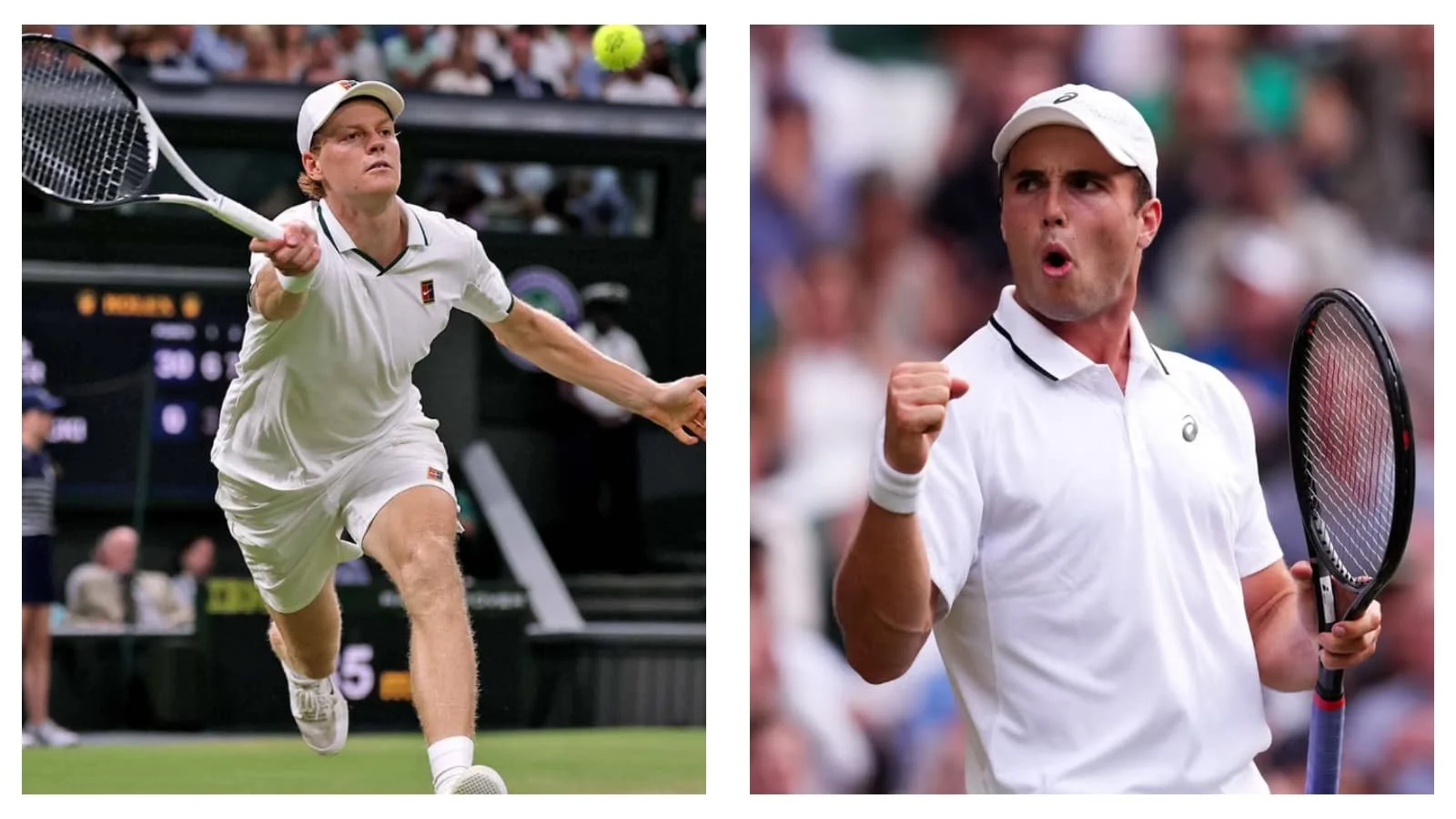
The Wimbledon Championships have long been the highlight of the grass-court tennis calendar, and the 2026 edition has delivered plenty of drama, quality, and shocks in the men’s singles.
This year’s tournament has also witnessed triumphs of resilience and underdog successes, with players bouncing back from adversity and lesser-known names advancing deep into the event.
Here, Sports News Blitz writer and tennis fan AJ Becker takes a closer look at 10 notable stories from the past nine days at SW19.

1. Sinner storms through
Jannik Sinner may have arrived in south-west London in a vulnerable position following his early exit at the French Open – with his decision to eschew prior grass-court events leaving him short of match practice – but the Italian’s Wimbledon title defence is now gathering real momentum.
The world number one was taken the distance by Miomir Kecmanović in round one, and two tie-break wins helped overcome Nuno Borges in the second.
The following rounds were negotiated in more convincing fashion as Sinner cruised to dominant straight-sets victories over Jenson Brooksby, Shintaro Mochizuki, and Jan-Lennard Struff, taking full advantage of their inexperience at those stages of a Grand Slam.
The 24-year-old’s fitness has long been a major concern, and that resurfaced in the hot conditions of Melbourne and Paris at the previous two slams.
With his Wimbledon semi-final scheduled for the daytime on what is forecast to be another balmy day, his physical condition could once again become a factor.
Nonetheless, taking on Sinner is arguably the toughest assignment in men’s tennis at this moment in time.
2. Djokovic defies time
With Carlos Alcaraz sidelined, Novak Djokovic has reason to believe that an opportunity to claim a record-extending 25th Grand Slam is his for the taking.
The Serbian turned 39 last month and has had a limited schedule this year, competing in only four official tournaments prior to Wimbledon.
No longer is the seven-time champion breezing through matches in the early rounds; only one of his five opponents was unable to take a set off him.
Even so, Djokovic has called upon his vast Grand Slam pedigree and unrivalled composure in pressure moments to manage those contests successfully, building confidence and fine-tuning his game along the way.
Djokovic’s greatest challenge now is arguably managing his body well enough to sustain a high level over lengthy matches.
And the examination paper could hardly have been tougher in his quarter-final against in-form Canadian Félix Auger-Aliassime.
Yet, the Belgrade native somehow outlasted his opponent in a five-hour endurance test – surely among Centre Court’s most memorable night matches – to secure his passage into a 15th semi-final at SW19.
In his 21-year Wimbledon career, Djokovic has taken consistency to a dizzying extreme: 17 quarter-finals or better, not a single first-round defeat, and immaculate records against players ranked outside the top 50 (42-1) and top 100 (20-0).
Another record held by Roger Federer was also eclipsed this week – that of Wimbledon match wins (105).
Djokovic must now understand his own greatness and how it is essentially independent of comparison.
MORE FROM AJ BECKER: ATP grass court season, week three: A trio of Brits qualify for Wimbledon, new names on the trophy at Eastbourne and Mallorca
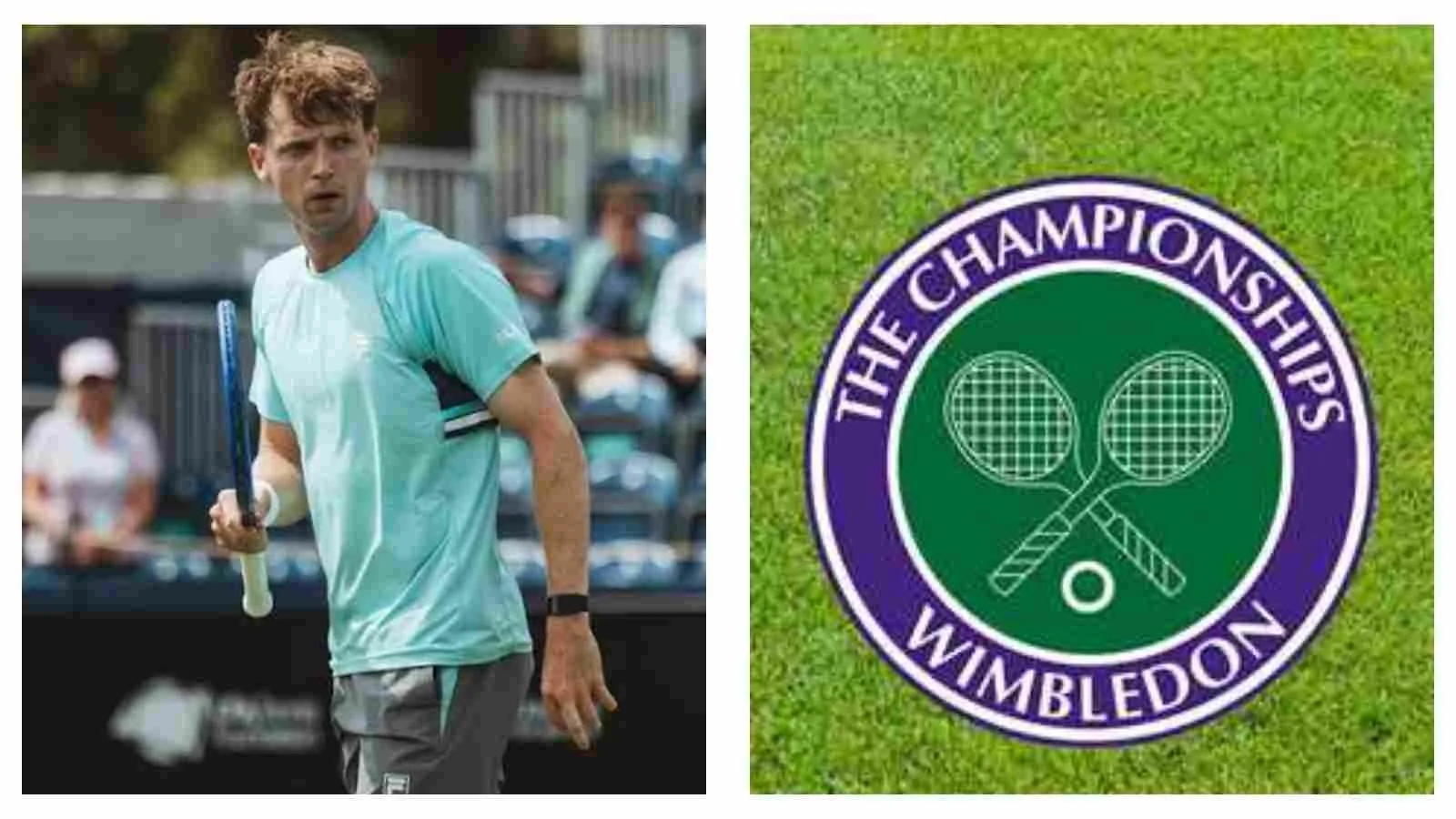
3. A Fery-tale run
Some of my fondest Wimbledon memories consist of relatively unknown British players refusing to be daunted by the overwhelming weight of the country’s past and pulling off unlikely wins before their comfort zones were reinstated on the Challenger Tour.
The names may still be familiar to British tennis fans: from Chris Wilkinson, Luke Milligan, and Danny Sapsford in the 1990s through to Barry Cowan, Lee Childs, and Chris Eaton in the 2000s and the likes of Marcus Willis and Liam Broady more recently.
What’s more, the run of a wild card can later become a primary point of reference in the athlete’s career as well as give the tournament a broader context and sense of purpose.
This year, the opening day was defined by the depressingly familiar terrain of several early exits for local players, including British number one Cameron Norrie.
An emotional gearshift was to follow, however, as Arthur Fery gave home fans the fillip they so sorely needed by enacting a routine four-set victory over the struggling Damir Džumhur.
Fery, an alumnus of King’s College School in Wimbledon, then capitalised on Otto Virtanen’s lack of energy (more on him later) before battling past Eastbourne champion Zizou Bergs, a player with considerably more experience and success at tour level.
Yet, this would be upstaged by his stunning win over former semi-finalist Grigor Dimitrov in the round of 16, with Fery recovering from two sets to one and a break behind as he had against Bergs.
Fery, who turns 24 on the day of the final, enjoyed a positive build-up to Wimbledon with a last-four placing at the Birmingham Challenger event and a last-eight presence at the Queen’s Championships – though he would have remained unknown to a wider audience.
Becoming the first British wild card to make this stage at Wimbledon since the competition introduced the concept in 1977 means Fery will now be blasting his way into the top 100’s lower reaches, opening the door to more regular opportunities at tour events.
The former Stanford University student boasts elements of an all-court style that is inescapably promising, and should he retain the quality and mentality he has deployed here, while remaining grounded, there is exciting potential for his future career.
READ MORE: Wimbledon 2026 news: Arthur Fery's dream run continues with historic semi-final place
4. Mixed British success
Fery aside, few Wimbledon tournaments in recent memory have inspired as much indifference in home players as the 2026 edition.
Among the usual cadre of wild cards, Oliver Tarvet – who qualified without dropping a set – ran 25th seed Arthur Rinderknech close, winning only two games and points fewer than his big-serving opponent.
Toby Samuel also came close to eliminating 15th seed Jakub Menšík, performing well beyond expectations before falling 10-7 in the deciding tie-break.
Jan Choinski matched his 2023 achievement of taking out a fellow clay specialist (this time Vít Kopřiva), whilst Jacob Fearnley – whose year has been plagued by substandard form and fitness – creditably rallied from two sets down to defeat Alex Michelsen.
As it happens, six of Fearnley’s 13 wins this season have taken place on grass, with all six earned in deciding sets.
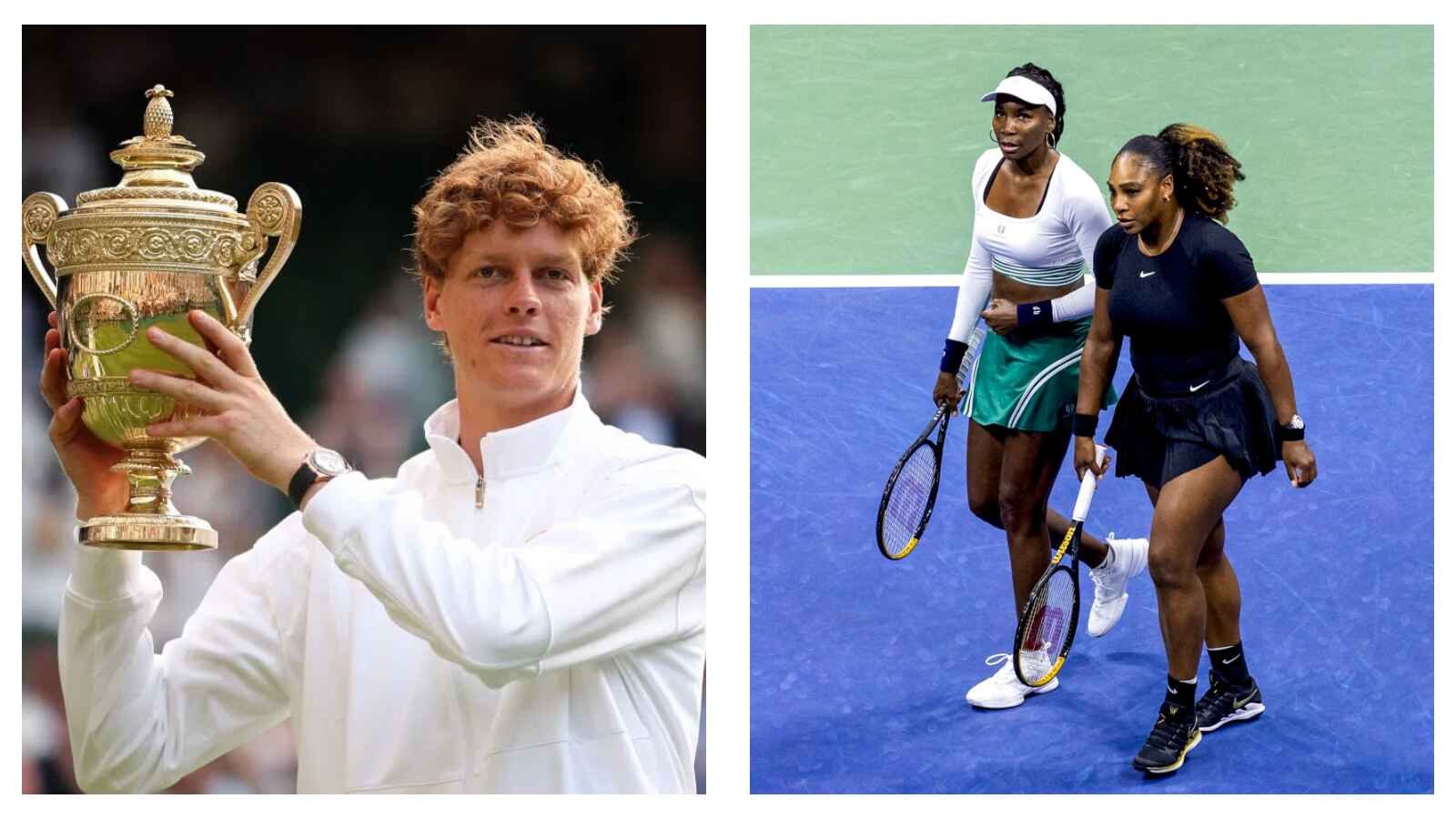
YOU MAY ALSO LIKE: Wimbledon 2026 preview: Jannik Sinner's title defence, Williams sisters' return and more
5. Struff struts again
Players who repeatedly find ways to escape adverse situations and build momentum often become dangerous opponents – Jan-Lennard Struff’s Wimbledon story can be seen as a case in point.
The German found himself a break down in the deciding set against Sebastian Baez, then 7-4 behind in the super tie-break versus Brandon Nakashima, but he won on both occasions.
Struff had his serve broken early in all three sets by Daniil Medvedev and lost the first two sets to Hubert Hurkacz, both of whom have made the semis at Wimbledon, but he once again won on both occasions.
The former world number 21 had been suffering a dismal 2026, without any back-to-back main-draw wins and with his slide down the rankings continuing unabated.
However, the veteran didn’t need to alter his tennis blueprint so much as sharpen it: ultra-aggressive tactics, smooth strokes, and inspired net play.
Hitting exactly 100 aces in those four wins helped the 36-year-old attain his maiden slam quarter-final, having never progressed beyond the third round in 11 previous Wimbledon appearances.
Can this run be the catalyst for a transformation in his fortunes?
6. Dimitrov bounces back
Grigor Dimitrov endured a heartbreaking moment at Wimbledon last year – leading eventual champion Sinner by two sets to love in the fourth round before sustaining an injury that forced him to retire.
The Bulgarian then played a sole tournament in the remainder of 2025 and was on the receiving end of numerous defeats across all surfaces this year, which saw him tumble out of the top 100.
However, the former world number three has used the grass season to expedite his recovery, both physically and mentally.
Following quarter-final runs at the Dublin Challenger event and the ATP Mallorca event, the 34-year-old secured confidence-boosting victories over Menšík in four sets and Matteo Berrettini in five on the Wimbledon courts.
Dimitrov has been an elite operator on the surface ever since he took the boys’ singles title in 2008.
And his articulate, humble, and courteous nature in post-match interviews after those wins meant he will have spell-weaved his way into the hearts of many spectators.
7. Qualifiers show mettle
When plying one’s trade on the Challenger Tour, one has a noticeably different atmosphere, ambition, and audience.
For those players, a rankings boost of 40 places and a prime-time slot on Centre Court or Court One represents a giddy peak of mainstream acceptance.
This Wimbledon has therefore assumed real importance in the seasons and careers of Japan’s Mochizuki and Roman Safiullin of Russia.
Having already made a fine account of himself in round one by pulverising qualifier Max Basing, Mochizuki proceeded to sort out Mallorca’s runner-up Ethan Quinn and upset 23rd seed Rafael Jodar – who admittedly had no competitive grass experience before Wimbledon.
Although Sinner brought his run to an end in the last 16, Mochizuki – the 2019 junior champion – has proved himself capable of top-class grass tennis, his Challenger aesthetic enhanced by occasional tour action.
The 23-year-old’s agility, speed, precision, and shot placement has countered his lack of a big serve and ensured successful qualification for three of the last four Wimbledon events.
Safiullin, meanwhile, doubtless has the ability to deliver top-20 quality tennis when fully focused and fit.
The Russian made the quarter-finals on his main-draw debut in 2023 before his career was heavily disrupted by injuries.
If his mission was to provide a reminder of his greatness, the 28-year-old succeeded in spades.
Safiullin’s clean ball-striking was the key to a hat-trick of five-set wins: defeating Jerome Kym in the final round of qualifying before upsetting Andrey Rublev in the first round and Botic van de Zandschulp in the second.
He then took advantage of Joao Fonseca’s minimal grass experience to dump out the 24th seed.
American qualifier Michael Zheng – still balancing his college commitments with the professional tour – also advanced to round three, capitalising on Norrie’s lack of fitness and Nicolas Mejia’s novice status on grass.
The 22-year-old possesses much fighting spirit and never-say-die qualities, with the ability to drag opponents into long battles.
Learner Tien is widely recognised as the young American with the most potential, but one would do well to consider Zheng in the same light.
8. Match of the tournament
Saturday’s third-round clash between Frances Tiafoe – who entered the contest with considerable momentum – and Alexander Bublik – who had hitherto fallen short of expectations in the grass season – lived up to its billing and then some.
The Court One crowd witnessed the purest distillation of all Bublik’s strengths: mammoth serves, fierce groundstrokes, and drop shots in mediated, tactical doses.
Bublik’s total of 48 unanswered serves meant ace saturation point had been reached by the time the Kazakh celebrated victory in a thoroughly entertaining four-hour affair.
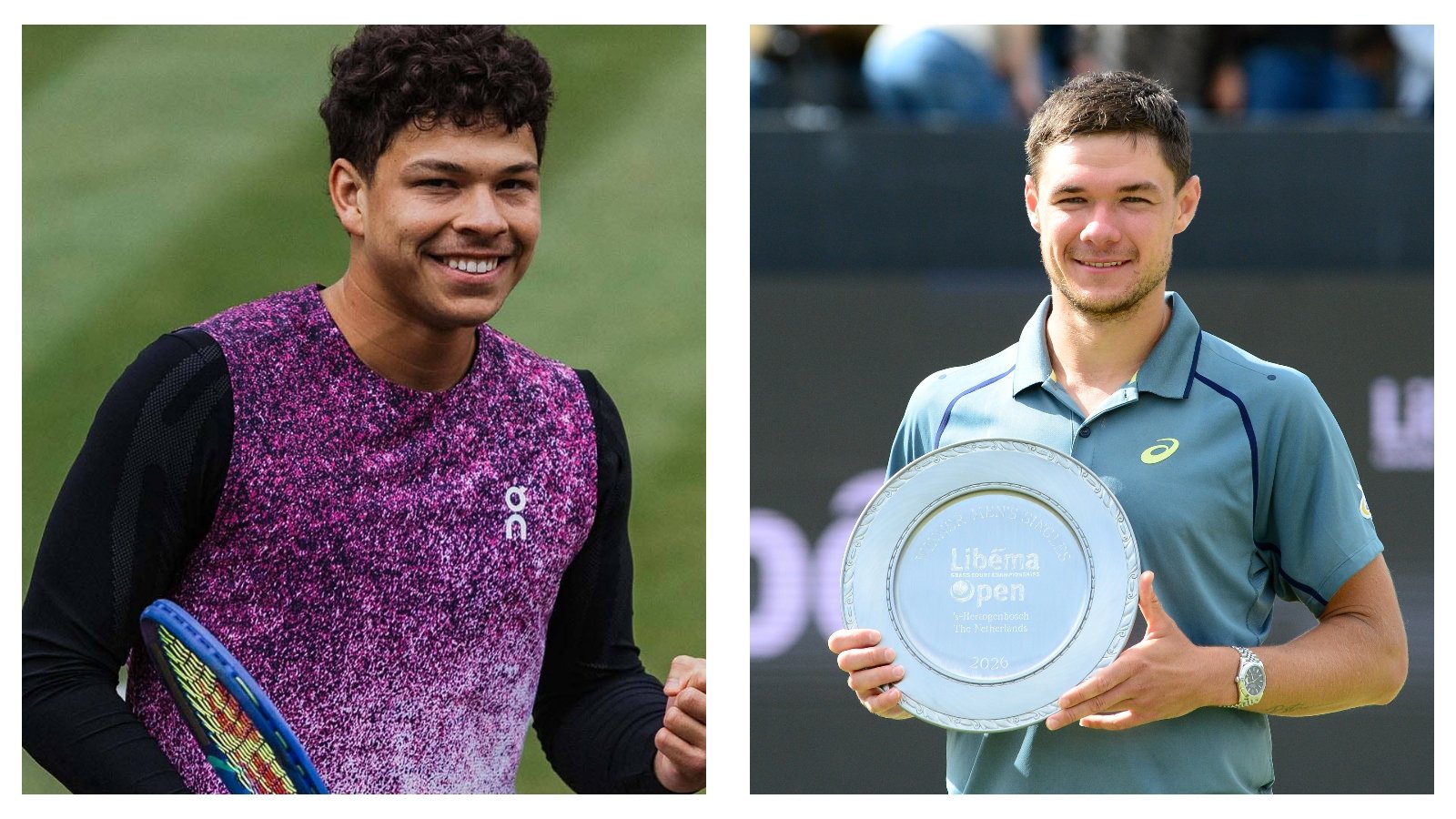
YOU MAY BE INTERESTED IN: ATP grass court season, week one: Kamil Majchrzak takes the title in Den Bosch, and Ben Shelton shows spirit in Stuttgart
9. Upset of the tournament
Finland’s Virtanen boasts an impressive 70 per cent career win rate on grass and reached a pair of Challenger finals on the surface in June before successfully negotiating the qualifying rounds at Wimbledon.
Unfortunately, the 25-year-old was handed a daunting first-round draw against fourth seed Ben Shelton.
The in-form American had only two exits at that stage on his slam CV prior, yet the world number 140 rose to the challenge terrifically.
Virtanen’s comeback from 2-1 down was an exercise in grass court brilliance and without question the apogee of his career.
10. Farewell to Wawrinka
Last but certainly not least, 41-year-old Stan Wawrinka belied his age and veteran status in a closely-fought round-one clash with 2021 runner-up Berrettini.
This was a pumped-up, brute-force affair played on an arena scale, with four tie-break sets and 47 aces.
Although he lost, the soon-to-be-retired Swiss demonstrated to a reverent crowd that his ability to battle with the best remains intact – even on his worst surface – and his farewell tour may yet have a surprise or two in store.