The tall jockeys who beat the scales in British racing
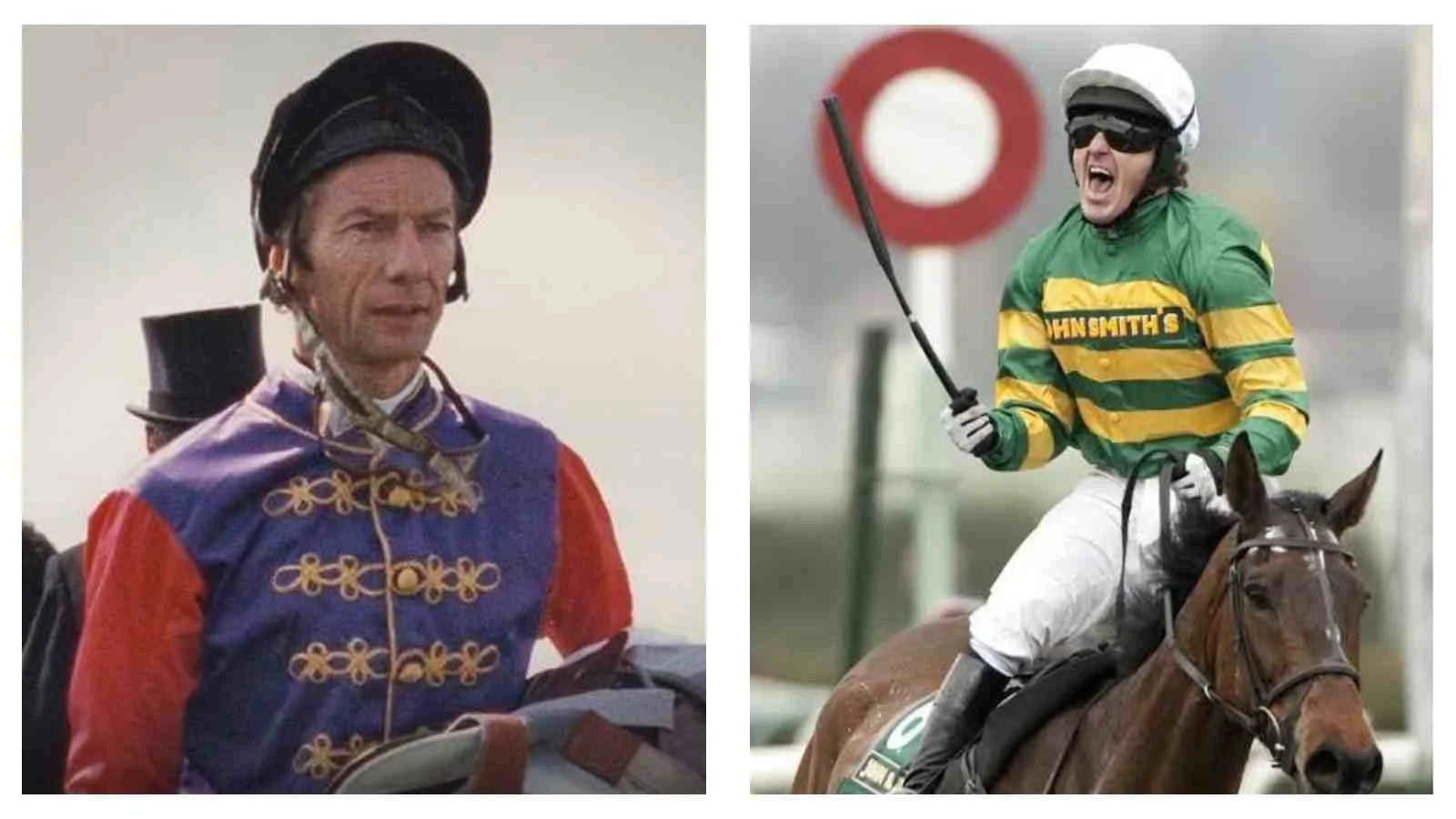
Most people picture a jockey as small and light, and with good reason. Weight is the one thing a rider cannot hide, and every pound counts when a horse is carrying a set burden.
Yet some of the most successful names in the sport's racing results have been unusually tall for the job.
Their careers show how much discipline it takes to keep riding when your body is working against you.
Why height matters for a jockey
Every race in Britain sets the weight each horse must carry, and that weight includes the jockey, the saddle and any lead added to make up the difference.
On the Flat, the minimum weight is 8st 2lb, while over jumps the lowest weight is 10st 2lb.
A taller frame carries more bone and muscle, so a tall rider has to work harder to reach those figures.
Most Flat jockeys stand between about 5ft and 5ft 6in. Anyone above that is fighting the scales for their whole career.
Fred Archer, the first great tall champion
Fred Archer was the dominant jockey of the Victorian era, winning 13 consecutive championships between 1874 and 1886. He stood around 5ft 10in, very tall for a Flat jockey then or now.
To keep his weight down, Archer relied on Turkish baths, strict starvation and a purgative so strong it became known as Archer's Mixture.
The toll was severe. Weakened by wasting and grief after the death of his wife, he took his own life in 1886, aged just 29.
His story is still told as a warning about the cost of making the weight.
Lester Piggott, the Long Fellow
Lester Piggott was nicknamed the Long Fellow for good reason.
At about 5ft 8in, he was taller than almost all of his rivals, yet he rode on the Flat for nearly five decades and often at around 8st 5lb.
He managed it with a famously sparse diet, and the cigar became part of his image.
His record speaks for itself: 11 jockeys’ championships, a record nine Derby wins and more than 4,000 winners in Britain, enough to keep any punter who followed him reaching for a bet calculator.
His riding style, with his body held high above the horse, was partly a result of his height and was widely copied.
George Baker and the modern Flat
George Baker was one of the tallest Flat jockeys of recent times, usually listed at around 5ft 10in.
He built a successful career riding in Britain and won the St Leger at Doncaster on Harbour Law in 2016.
His career ended after a serious fall on the snow at St Moritz in 2017.
Before that, he spoke openly about the daily effort of riding at light weights with a frame built for a heavier sport, and he became one of the best-known examples of a tall rider succeeding in a short rider's game.
AP McCoy and the jumps weigh room
Jump jockeys ride at higher weights, so tall riders are more common over fences and hurdles. Even so, the demands are relentless.
Sir Anthony McCoy, around 5ft 10in, was champion jockey 20 times in a row and rode more than 4,000 winners.
McCoy has described years of hot baths, saunas and very little food to keep himself at riding weight.
His success, including the 2010 Grand National on Don't Push It, came alongside a constant battle with the scales.
At the other end of the scale
For contrast, Willie Carson is described as a “5ft powerhouse” by the British Racing Hall of Fame and won five Flat championships, along with four Derbys.
His size let him eat far more freely than his taller rivals ever could.
Modern racing has also changed how riders manage weight, with nutritionists and better medical support replacing some of the harsher methods of the past.
Height is still a disadvantage, but the stories of Archer, Piggott, Baker and McCoy show that it has never been a barrier to reaching the very top.
READ NEXT: NBA news: 76ers shock Knicks, Thunder outclass Spurs and Pistons overturn Celtics on opening night