F1 news: Five takeaways from Ferrari’s Austrian Grand Prix as progress tempered by frustration

Scuderia Ferrari arrived in the Styrian hills after the Barcelona-Catalunya Grand Prix full of momentum and with the addition of a new, more powerful power unit.
Whilst both Ferraris performed well across the first part of the race weekend, especially in qualifying, their Sunday was awful, with a lack of pace compared to competitors and poor strategic calls in an attempt to compensate that ultimately didn’t work out.
Here, Sports News Blitz writer and Ferrari fan Luca Salmasi takes a look at five key takeaways for Ferrari.

Strong qualifying pace
Saturday’s qualifying produced another strong performance from both Lewis Hamilton and Charles Leclerc.
On an extremely hot day in Austria, with temperatures on track peaking at 52 degrees, both Leclerc and Hamilton made it through Q1 and Q2 using new sets of soft tyres.
Both drivers had an additional pair of softs, and it looked set to be a Ferrari front-row lockout, but a Max Verstappen crash in the final corners brought out yellow flags and George Russell just managed to complete his lap and push the pair into second and third.
Excessive tyre wear
Team principal Fred Vasseur suggested that Ferrari’s struggles were primarily due to excessive tyre wear and overheating rather than strategy.
Both cars were forced into a three-stop strategy, whilst most of the front runners stuck with a two-stop strategy.
Hamilton eventually finished 26 seconds behind race winner Russell.
He ran second early on but reported a strong shift in balance after his first stop.
Later in the race, his engineer told him to swap to a different engine mode to help with the high temperatures, and Vasseur believed that the team tried too hard to keep up.
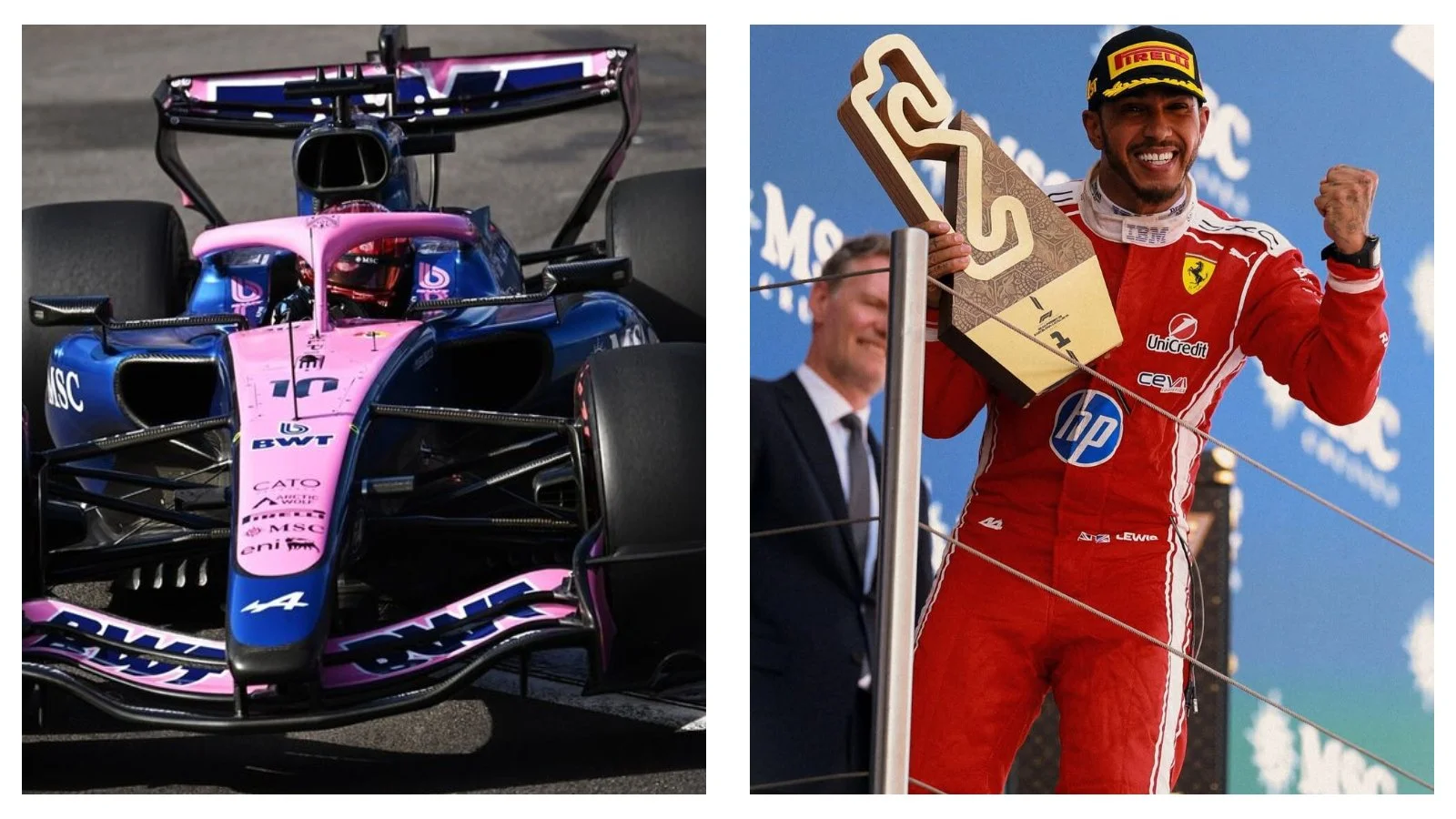
Engine upgrade underdelivered
Austria marked the debut of what was supposed to be a stronger, much faster engine for Ferrari, but it ultimately didn’t show its true potential.
Whilst qualifying initially showed some improvement, the upgrade wasn’t sufficient to reveal the team’s underlying issues during the race.
Indeed, Hamilton complained about a continuing power deficit on the straights compared to rivals Mercedes.
A reality check
Hamilton finished fifth after limiting the damage in what was a difficult and stressful afternoon, whilst Leclerc slipped from the front row and could only manage an eighth-placed finish.
After Ferrari’s victory in Spain, Hamilton described the result as a “reality check”, stressing that further development is essential if the team want to stay in the championship fight and be truly competitive.
YOU MAY ALSO LIKE: Wimbledon 2026 preview: Jannik Sinner's title defence, Williams sisters' return and more

Silverstone test awaits
Ferrari leave Austria encouraged by their one-lap speed but frustrated that a promising weekend turned into such a painful one thanks to inconsistent race pace.
Understanding how the car can compete on a Saturday but struggle so badly on a Sunday is imperative before the next race at Silverstone.
The SF-26 is capable of fighting near the front, but a combination of overheating and tyre-management issues prevents it from properly competing with Mercedes over a full race distance.
Ferrari faces a tough choice before Silverstone: they can adopt a higher-downforce set-up to enhance the SF-26’s cornering, knowing it will make them slower on the straights, or they can reduce rear-wing downforce to boost straight-line speed, sacrificing their main advantage.
Whichever route they choose, finding the right compromise will be crucial if they are to challenge consistently throughout the British Grand Prix.
READ NEXT: Former Formula 1 leader reveals the leadership rule that stops teams burning out under pressure