ATP Tour news: Novak Djokovic silences critics to claim seventh China Open title
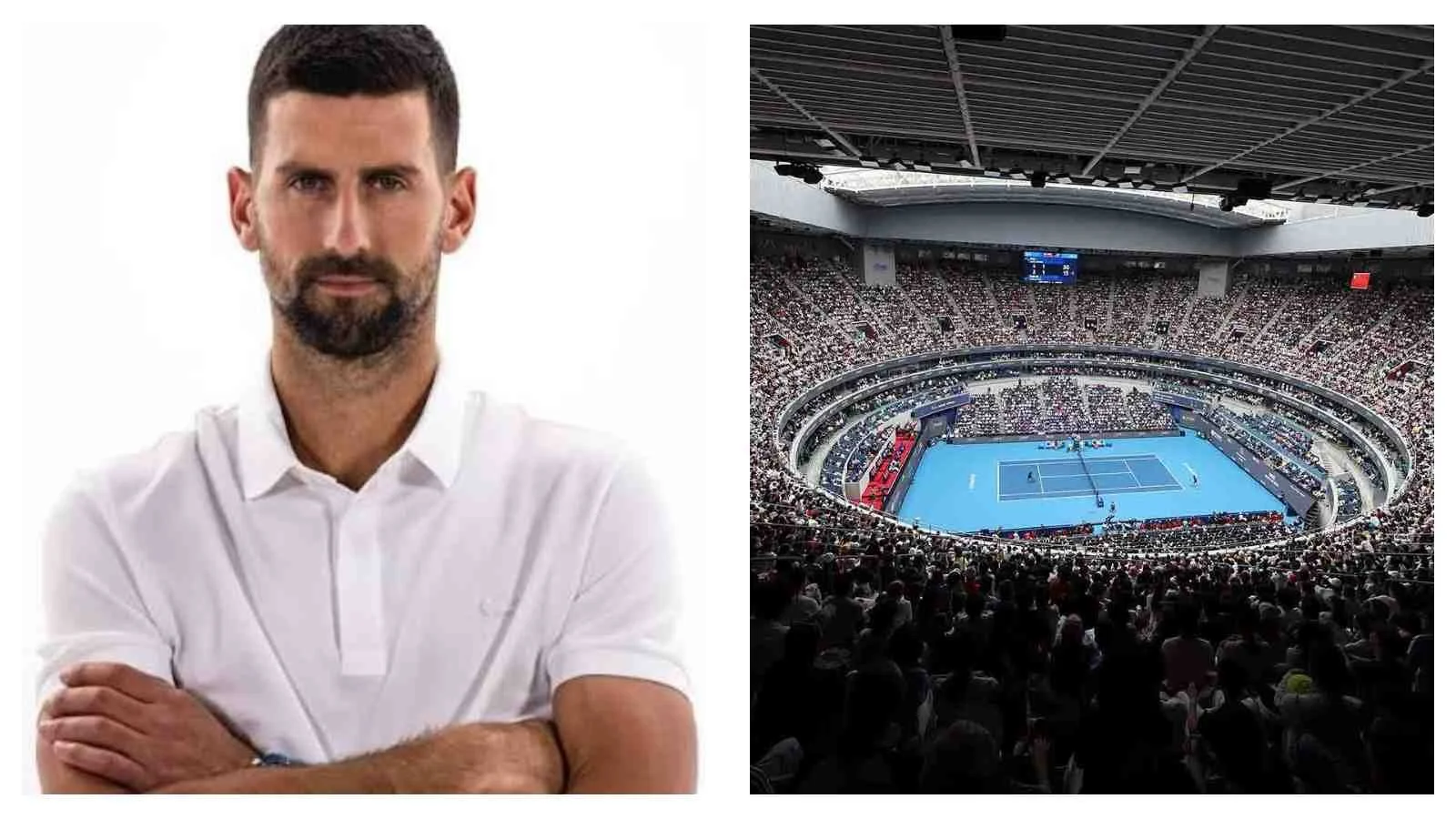
The ATP Tour is now in its autumn phase, with 250-level tournaments in Chengdu and Hangzhou followed by 500 events at Beijing and Tokyo – which are themselves preludes to the Shanghai Masters.
In the Chinese capital, Novak Djokovic rolled back the years to win the title and continue his remarkable undefeated record at the competition (34-0) – having not played there since 2015.
This latest triumph is the Serb’s 102nd tour-level trophy, and ensures he has won at least one in every year since 2006, as well as rendering him the oldest to do so in almost half a century!
Here, Sports News Blitz writer and tennis fan AJ Becker takes a closer look at Djokovic’s achievement and the values that have underpinned his extraordinary career.
Battling against the odds
It might be stated that Djokovic was at his lowest ebb in years upon arrival in China.
With his confidence and morale seemingly waning after a series of upset defeats in Masters events, along with a first opening-round exit at a Grand Slam in 20 years, the 39-year-old had dropped out of the top 10 for the first time since 2018 - and appeared all-but spent as a tennis force.
Despite having not played in Beijing since last winning the title 11 years ago, despite having to overcome three top 10 players in as many days – namely Alexander Zverev, Daniil Medvedev and Alex de Minaur – and despite requiring numerous medical timeouts along the way, Djokovic found the spark he needed to land a 73rd hard court trophy and further fortify his extraordinary legacy.
Building it slowly
Having been written off by many, the Serb has shown once again there is life in the player whose trophy-winning habit began back in 2003.
Aged 16 and ranked #767, his first Futures title was achieved against César Ferrer-Victoria – a player who never evolved from ITF obscurity.
Three Challenger crowns in the space of a year helped elevate Djokovic from #515 to #128, taking up residence in the top 100 soon afterwards.
His talent was apparent upon first viewing to the Dutch fans who gathered to witness the then-36th-ranked Serb defeat Nicolás Massú and claim a maiden tour title, on the clay of Amersfoort, in the long hot summer of 2006.
Djokovic’s rapidly progressing mastery of tournament play was complemented by his surmounting of the physical problems that had so often plagued him in those early days.
After conquering the Miami Masters whilst still a teenager, the Serbian signalled his arrival in the big league by winning the Australian Open at the start of 2008.
Competing with the greatest
It was in 2011, however, that Djokovic cast a captivating spell across the tour.
The statistics are staggering: 70 victories including 41 in a row, 10 trophies including three slams and five Masters.
Most impressive of all, though, was his dominant record (10–1) in clashes with Rafael Nadal and Roger Federer – arguably the two greatest players of all time at that point.
In the mid-2000s, the aforementioned duo were simply a step removed from the rest of the tour – taking 14 of the 16 slams during 2004-7 – and, understandably, had plaudits lathered upon them far and wide.
Spurred on by ambition, ego and a drive for recognition, Djokovic went on to outmatch not only those two, but also Andy Murray, Stan Wawrinka, Juan Martin del Potro and the multitude of other exceptional players born in the 1980s.
Sufficient recognition?
Despite his colossal achievements, Djokovic himself always felt – and to some extent still feels – that he had never received the same acclamation, indeed adulation, afforded to Roger and Rafa.
A possible explanation for the above may be his style of play; Djokovic’s is more nuanced and less immediately striking to the casual spectator than Federer’s stylish flair and balletic elegance, or Nadal’s relentless passion and gladiatorial spirit would be.
There are also arguments of likeability and personality, as well as the theory that his home country may be considered far-off or unfashionable compared to Spain and Switzerland.
Style of the times
Pete Sampras was widely considered the greatest before the ‘big three’ came along; Djokovic has alluded to admiring the seven-time Wimbledon champion as a child in the 1990s.
Back then, ‘Pistol Pete’ was the king of serve-and-volley, with many other elite players also serve-and-volley ‘fundamentalists’ according to the Sampras gospel.
With the sport becoming wearyingly one-dimensional, Djokovic and most of his generation adopted a ‘baseline rally’ strategy in the 2000s.
The Serb became an expert practitioner in that baseline style – a style tethered to trend and time – as serve-and-volley now lies somewhere between demode and extinct.
Djokovic is still a most proficient unlocker of opponents’ rearguards, and his command of the serve return remains unsurpassed.
Bouncing back from adversity
Indeed, the preponderant playing style is just one of many epochal changes that have taken place in the two decades in which the Serb has been competing.
Even after a period of decline in 2017 and 2018, during which his ranking plummeted – seemingly taking his belief and winning mindset with it – Djokovic bounced back by doubling his Grand Slam tally, proving once again that no-one can outflank him on mentality.
His natural on-court expression is solemn, that competitor’s necessary snarl always within reach.
Detractors may point to the frequent complaints made to umpires, the occasional provocative gestures towards audiences, the views on COVID vaccines expressed – and likely held in private.
Nonetheless, the 39-year-old has almost always displayed humility in defeat as well as class in victory, and isn’t it refreshing for a player to express their views, rather than address the media as if a trained AI bot?
This latest Beijing triumph felt so potent and poignant, so emblematic of the relentless pursuit of greatness that has defined his career.
READ NEXT: Golf news: Ryder Cup winner Jon Rahm announces departure from LIV Golf as tour faces bankruptcy