Adidas Trionda Controversy: Why the 2026 World Cup Ball is Causing Goalkeeper Chaos
The 2026 World Cup was never going to follow expectations. Tournament football rarely does, and there have been multiple nations that have surprised fans during the group stages.
There have been several memorable moments, including Canada’s first win in World Cup history.
Those results have seen a shift in World Cup 2026 betting odds, as sportsbooks re-evaluate how far each country might progress.
However, that jubilation has not been without controversy.
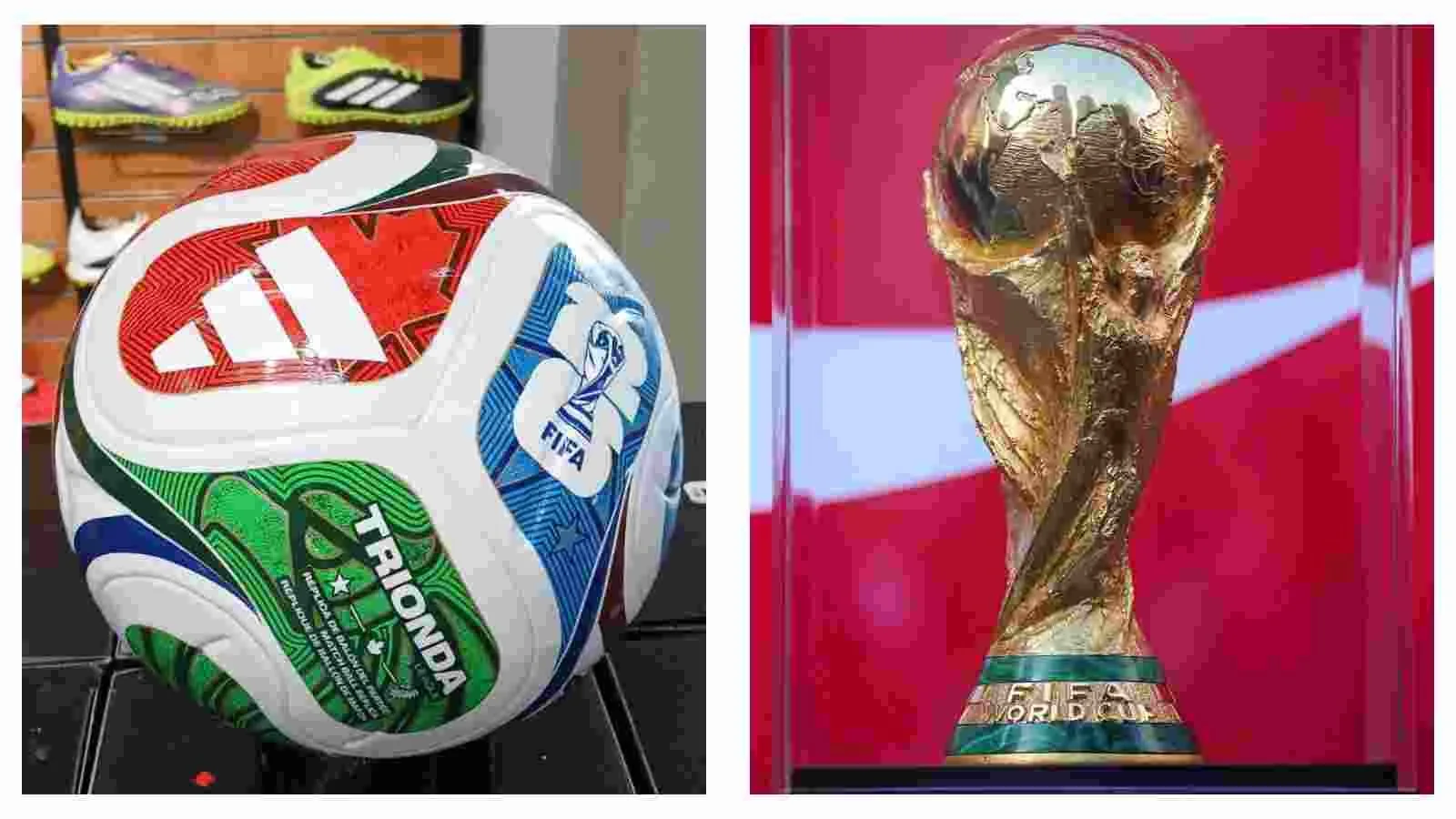
An array of spectacular goals have been scored, which has resulted in greater focus on Adidas’ ‘Trionda’, the official football for the tournament, and how it is behaving in matches.
The innovations behind the ‘Trionda’
The four-panel ‘smart ball’ being used in North America is a technological marvel, as it incorporates artificial intelligence to ensure more accurate decisions.
It has an inertial measurement unit (IMU) sensor embedded in one of the panels, which allows officials to track data at 500 times a second.
That includes when a player touches the ball, something which was not visible to officials at the last World Cup in Qatar.
It has already been utilised in Sweden’s win against Tunisia, highlighting that Alexander Isak had touched the ball in the build-up to Mattias Svanberg’s goal, which led to the VAR overruling the initial offside call.
Along with the integration of new technology, the ball features deep seams which are supposed to encourage greater stability in flight and create even amounts of drag.
But it’s these exterior design choices which have become a greater talking point throughout the World Cup.
Why is it a talking point?
According to analysts and former goalkeepers, the design of the ‘Trionda’ is creating a degree of unpredictability for shot-stoppers.
They believe that it is travelling at greater speed, which is leading to more goals from outside the penalty area and more mistakes from goalkeepers.
Luca Zidane, for example, failed to parry Lionel Messi’s long-range shot during Argentina’s 3-0 win against Algeria, despite getting a hand to the ball.
He is not the only goalkeeper who has made a similar mistake, and others have failed to grasp the ball after powerful strikes, spilling them back into the path of an attacking player which has resulted in a tap-in.
Playing conditions in stadiums have been flagged as the potential cause behind the errors.
Playing at high altitudes, in extreme heat, or in stadiums without air conditioning means that there is less wind resistance, thus impacting the speed at which the ball travels.
And as each stadium is different, that means how the ball behaves could change dramatically depending on a match’s location.
Other World Cup footballs that faced similar criticism
The spotlight on the football used at the World Cup is nothing new for FIFA.
In 2010, Adidas’ ‘Jabulani’ faced similar criticism by goalkeepers and outfield players, as the eight-panel design led to greater top speeds, which resulted in a knuckle-ball effect that was difficult to react to.
In 2018, the Telstar 18 became a talking point when two balls burst in France’s match against Australia, while David de Gea and other goalkeepers also slammed it for being hard to judge.
More recently, the ‘Al Rihla’ used at Qatar 2022 was labelled too light, as Adidas sought to reduce air resistance in extreme temperatures.
Now, it is the ‘Trionda’s’ turn to face the same scrutiny, as goalkeepers and outfielders alike all look to master its flaws.
A nation’s success in the knockout stages could well come down to a fumbled shot in the dying embers of games, which will no doubt make Adidas’ latest creation an even bigger talking point.
READ NEXT: World Cup 2026 analysis: Why Thomas Tuchel’s England squad suddenly makes sense